
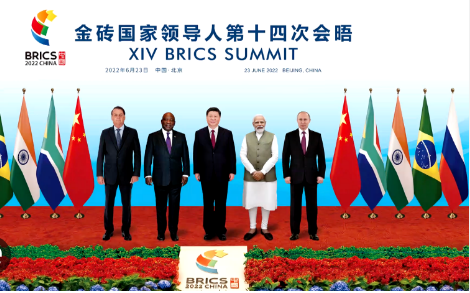

Top national security officials and senior diplomats from BRICS (Brazil, Russia, India, China, and South Africa) and various developing countries have convened in Johannesburg, South Africa, for a significant three-day meeting. The gathering aims to facilitate an in-depth exchange of views on pressing global security issues, including the Russia-Ukraine conflict, and address common concerns. Experts believe that this meeting serves as political preparations for the upcoming leaders’ summit scheduled for August.
The meeting, chaired by South African President Cyril Ramaphosa’s national security advisor Sydney Mufamadi, is part of a series of BRICS meetings held ahead of the BRICS Summit in South Africa from August 22 to 24. In a notable development, representatives from a record 45 countries will participate in the dialogue, reflecting the growing interest in the mechanism.
Among the attendees is Wang Yi, the director of the Office of the Foreign Affairs Commission of the Communist Party of China (CPC) Central Committee, and a member of the Political Bureau of the CPC Central Committee. The presence of senior national security officials from other BRICS and non-BRICS countries, including Russia’s Nikolay Patrushev, Iran’s Ali-Akbar Ahmadian, and India’s Ajit Doval, highlights the meeting’s significance in coordinating efforts and cooperation.
Traditionally, senior finance, diplomacy, and security officials from BRICS member countries hold meetings ahead of the leaders’ summit to foster collaboration and exchange views. The Meeting of BRICS National Security Advisers and High Representatives on National Security serves as a crucial platform for political and security cooperation among BRICS nations. The discussions during the three-day meeting aim to align the stances of BRICS countries on major global security issues, promoting true multilateralism and global peace.
Topics of discussion during the summit will cover both traditional and non-traditional security threats, such as the Ukraine crisis, anti-terrorism, and cyber security. Additionally, concerns about nuclear weapons, food, and energy security will be addressed due to the chain effect caused by the ongoing Ukraine conflict. African countries’ security concerns and global multilateral governance will also be on the agenda in preparation for the leaders’ summit.
The growing interest of more countries in joining the BRICS mechanism underscores its expanding role in global governance. This year’s summit, which marks the first offline gathering of BRICS leaders in three years due to the COVID-19 pandemic, is highly anticipated for its potential to strengthen trust among members and achieve pragmatic outcomes. South Africa has invited the heads of state from all African countries, emphasizing the desire to partner with Africa for economic growth and cooperation with BRICS nations.
Furthermore, the meeting will address the growing interest of developing countries and new emerging economies in joining BRICS. Around 20 countries have applied to join the group, while an equal number has expressed interest in doing so. Developing countries seek a mechanism that represents their interests and can counterbalance the current international governance system, which some criticize as being dominated by the US and certain Western countries.
BRICS has been successful in fostering cooperation among developing countries without creating confrontations, earning support from nations that have faced geopolitical or ideological challenges. Contrary to Western media claims, BRICS does not seek to lead developing countries away from the West but aims to provide them with a voice in international affairs.
The upcoming summit in South Africa will showcase the strength of BRICS, with developing countries focusing on promoting economic development, trade, and finance cooperation to contribute significantly to global recovery and prosperity.