
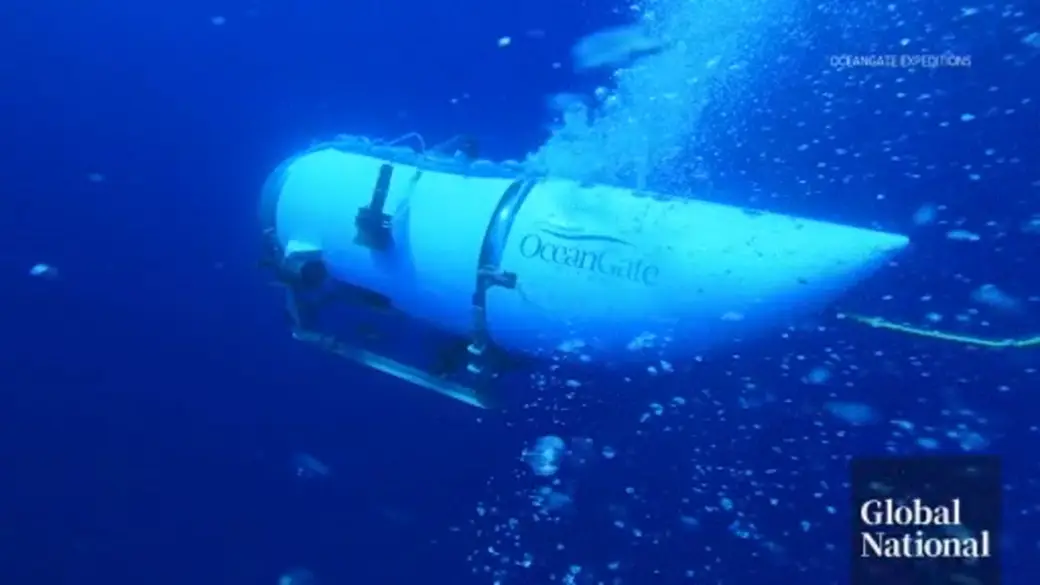

In the ongoing search for the missing Titanic submersible, a Canadian aircraft has detected underwater noises, leading to increased hope for a potential rescue operation. The Canadian Coast Guard ship John Cabot has been dispatched to the North Atlantic region to assist in the search efforts.
The U.S. Coast Guard released a statement without providing specific details about the nature of the detected noises. However, it did mention that there is optimism surrounding the situation, as it is estimated that the submersible may have only a day’s worth of oxygen remaining if it is still operational.
Onboard the missing submersible are pilot Stockton Rush, CEO of OceanGate Expeditions, the company leading the expedition, along with a British adventurer, two members of a Pakistani business family, and a Titanic expert.
The Canadian P-3 Orion, responsible for detecting the underwater noises, prompted the deployment of an underwater robot to investigate the area. Despite extensive searches, no significant findings have been reported thus far. However, search operations continue with the involvement of U.S. Navy experts.
Defence Minister Anita Anand confirmed that HMCS Glace Bay, equipped with specialized medical personnel, is en route to the search site. She emphasized Canada’s commitment to supporting the United States’ leading role in the search and recovery mission, stating, “We are doing everything possible to save lives.”
The Canadian Coast Guard ship John Cabot, equipped with side-scanning sonar capabilities, arrived at the search location on Wednesday. It is conducting search patterns in coordination with the ships Skandi Vinland and Atlantic Merlin.
The search for the missing Titanic submersible remains ongoing, with multiple agencies and vessels collaborating in hopes of locating and rescuing the passengers and crew on board.