
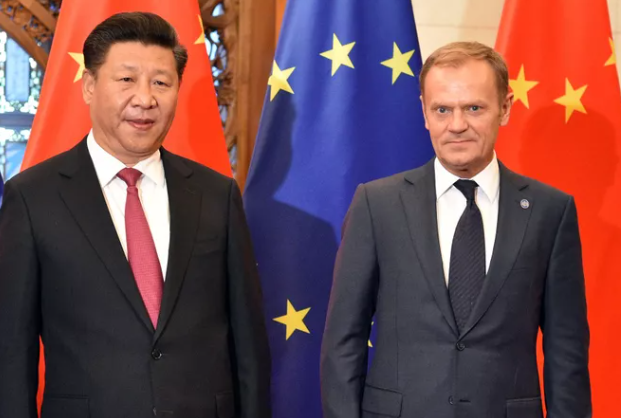

As global power dynamics continue to shift, Central European countries are playing an increasingly influential role in shaping the trajectory of China European Union relations. Once seen as passive observers in Brussels Beijing diplomacy, nations such as Hungary, Czech Republic, Poland, and Slovakia are now strategic battlegrounds for influence between East and West.
This evolving dynamic is raising questions about the cohesion of EU foreign policy and the future of its engagement with China amid growing geopolitical and economic competition.
The New Axis of Influence
China has long sought to strengthen ties with Central and Eastern Europe through its now struggling 14 plus 1 initiative, which was once hailed as a diplomatic breakthrough. However, recent withdrawals by Baltic states and growing skepticism in Prague and Warsaw have exposed fault lines.
At the same time, countries like Hungary under Prime Minister Viktor Orbán have doubled down on ties with Beijing, backing Chinese investments and opposing EU measures that target China’s human rights record or restrict Chinese technology firms.
“Central Europe has become the swing region in EU China relations,” said Dr. Anika Müller, a policy fellow at the European Institute for Geostrategy. “It is where Brussels consensus often clashes with national interest.”
Economic Promise or Political Risk
China’s economic footprint in Central Europe remains modest compared to its trade with Western EU states, but its symbolic weight is significant. Flagship projects such as the Budapest Belgrade high speed railway and the expansion of Huawei’s presence in Hungary are seen by critics as both strategic and political tools.
Supporters argue that Chinese investment offers a much needed alternative to Western capital and a chance for post communist economies to diversify their partnerships.
However, EU officials warn that growing Chinese engagement in the region may undercut EU wide efforts to establish a more assertive and unified China policy especially on issues like market access human rights and security.
A Test for EU Unity
Tensions were on display during recent European Council debates on de risking economic ties with China. While major economies such as Germany and France push for cautious distancing from Beijing, Hungary and to some extent Slovakia have resisted language that could jeopardize Chinese investment.
This has complicated Brussels’ effort to craft a coherent response to China’s growing influence and its positioning in global conflicts including the war in Ukraine and trade tensions with the United States.
“Unity on China is becoming as difficult as unity on Russia,” noted a senior EU diplomat. “And Central Europe is where that tension plays out.”
The Road Ahead
As the EU refines its foreign policy for an increasingly multipolar world, the role of Central European states will be critical. Whether they act as bridges or barriers in China EU dialogue could determine not only the future of Europe’s relationship with Beijing but also its credibility on the global stage.
While economic realities and political ideologies diverge across the region, one thing is clear: Central Europe is no longer just a periphery player in China EU relations. It is now a pivot point.
source: valdaiclub.com