
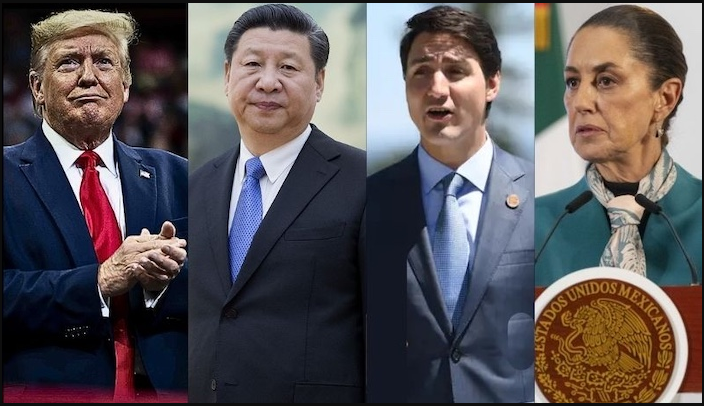

In a bold response to recent U.S. tariffs, both China and Canada have sharply criticized the measures, warning of further economic repercussions. The escalating trade tensions have already disrupted markets and raised concerns over the future of international trade relations.
China, a key global economic power, denounced the tariffs as “unilateral” and “discriminatory,” with officials asserting that the move would hurt not just their economy but also global trade stability. “The United States is undermining multilateral trade norms,” said a spokesperson for China’s Ministry of Commerce. “We will take all necessary countermeasures to protect our interests.”
Meanwhile, Canada, which has faced a series of tariff threats from the U.S. in recent months, mirrored China’s stance. Canadian Prime Minister Justin Trudeau condemned the U.S. actions as detrimental to both nations’ economies, emphasizing the importance of fair trade practices. “We are committed to standing up for Canadian workers and industries,” he stated during a press conference in Ottawa. “We will explore all options available to us.”
The trade dispute, sparked by new tariffs imposed by the U.S. on a range of imported goods, has raised alarm among global markets. Analysts fear that the growing tension could destabilize not only North American economies but also ripple across international markets, leading to reduced trade flows and increased prices for consumers.
Experts suggest that China and Canada’s coordinated response could lead to a more aggressive stance in upcoming trade negotiations. With both countries asserting their readiness to retaliate, the trade war seems far from over, leaving questions about how long the dispute will drag on and what its ultimate economic impact will be.
The United States, for its part, has yet to comment officially on the criticism, but President Joe Biden has previously defended the tariffs as necessary to protect American industries from unfair competition.
As this global trade dispute unfolds, the world watches closely to see how the U.S., China, and Canada navigate this increasingly tense economic environment.
source: belganewsagency.eu