
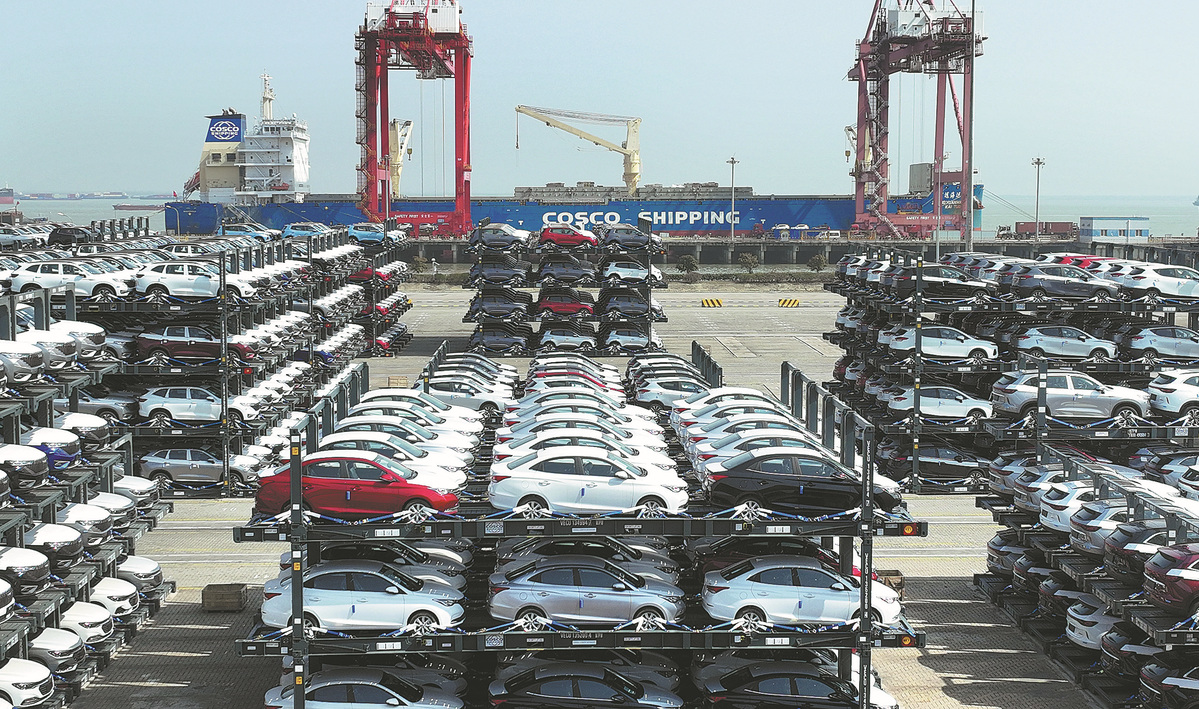

China and the European Union are reportedly nearing an agreement on the EU’s imposition of additional tariffs on Chinese-made electric vehicles (EVs), a development that analysts believe could help prevent further escalation of trade tensions between the two economic giants. A potential compromise would benefit the EV industry on both sides while strengthening the broader economic relationship between China and the EU.
Bernd Lange, chair of the European Parliament’s Committee on International Trade, told German broadcaster n-tv on Friday that the two sides are close to an arrangement where China would commit to offering EVs in the EU at a minimum price. While Lange did not provide specifics, this deal could provide a buffer for the EV sector amid months of rising tensions.
In response to allegations of unfair subsidies within China’s EV industry, the EU completed an investigation on October 29, which led to the imposition of tariffs up to 35.3% on Chinese EV imports, in addition to the standard 10% import duty. Despite this, both China and the EU held several rounds of technical discussions in early November, focused on finding a price undertaking agreement to mitigate the tariffs.
According to a source familiar with the talks, both parties have reached a “technical consensus” on the framework for such an agreement. This would allow China to agree on an acceptable export price and volume for EVs, in exchange for the EU removing the tariff hikes.
The potential deal could satisfy the EU’s concerns about protecting its domestic automotive sector while avoiding heavy tariffs on Chinese EV imports. However, experts like Sang Baichuan from the University of International Business and Economics cautioned that while the price undertaking agreement could provide temporary relief for European manufacturers, a sustainable local EV supply chain in the EU remains a long-term challenge.
China’s dominance in the global battery supply chain, with nearly 85% of global battery cell production capacity, makes it unlikely that Europe can fully depend on local production in the near future. Analysts suggest that European companies should adopt a more balanced approach, considering both competition and potential collaboration with Chinese automakers.
Cui Hongjian, director at Beijing Foreign Studies University, emphasized that the EU’s drive for a consensus reflects its strategic interests in avoiding further trade conflict, particularly given the ongoing economic challenges in Europe.
While both sides appear to be moving towards resolution, tensions continue to simmer in other trade areas. China has imposed temporary anti-dumping measures on select EU brandy imports, and is reportedly considering further tariffs on EU fuel-powered vehicles with large-displacement engines.