
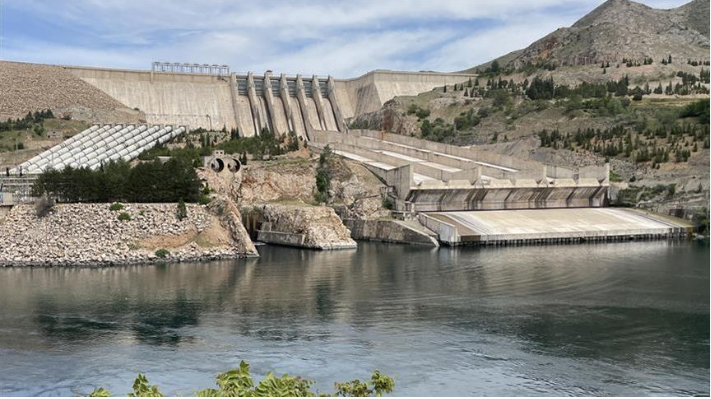

In a bold step that underscores its commitment to renewable energy and infrastructure dominance, China has officially launched construction on what will become the world’s largest hydropower dam. The project, located on the Yarlung Tsangpo River in the Tibet Autonomous Region, is being touted as a transformative milestone in global clean energy development and investors are taking notice.
The ambitious megastructure, dubbed the “Super Dam”, will surpass the Three Gorges Dam in scale, with an expected capacity of over 70 gigawatts, enough to power nearly 200 million homes annually. It will also significantly reduce China’s dependence on coal, aligning with its pledge to reach peak carbon emissions before 2030 and achieve carbon neutrality by 2060.
The announcement, made Monday by the National Energy Administration (NEA), triggered an immediate surge in Chinese infrastructure and clean energy stocks. The Shanghai Composite rose 2.1% on the day, while key players in hydropower engineering, such as PowerChina and Sinohydro Group, saw double-digit gains.
Capital Market Response
“Investors are clearly enthusiastic,” said Zhang Wei, an energy analyst at Guotai Junan Securities. “This signals not only a new era in China’s energy strategy but also massive opportunities in green finance, equipment manufacturing, and regional development.”
Chinese sovereign green bonds and environmental tech ETFs also posted gains as markets anticipated strong state-backed investment flows.
Environmental, Geopolitical, and Social Implications
The project, while heralded domestically, has sparked debate abroad. The Yarlung Tsangpo becomes the Brahmaputra River downstream in India and Bangladesh, raising cross-border water security concerns. Both nations have previously expressed reservations about unilateral hydrological interventions on the river.
Environmental groups, too, have voiced caution. “The ecological impact on one of Asia’s last free-flowing rivers could be irreversible,” said Liu Shuang, director of Energy Transition at China Dialogue. “We must ensure that green energy doesn’t come at the cost of biodiversity and local communities.”
Beijing has responded by emphasizing its commitment to environmental assessments and stakeholder dialogue. Officials say the dam will incorporate advanced fish migration systems and sediment flow management, although details remain scarce.
Strategic Infrastructure Push
This hydropower project is part of China’s broader “Western Development Strategy” a national campaign to economically uplift interior provinces. It will create tens of thousands of jobs and attract billions in regional investment.
Moreover, it serves a dual purpose: exporting surplus power to Southeast Asia through China’s expanding ultra-high-voltage (UHV) grid, bolstering its influence as the region’s clean energy superpower.
Looking Ahead
With completion projected by 2032, the Super Dam could redefine not only China’s energy landscape but also global benchmarks for sustainable infrastructure. Whether it becomes a model or a cautionary tale will depend on how Beijing balances growth, diplomacy, and ecology.