
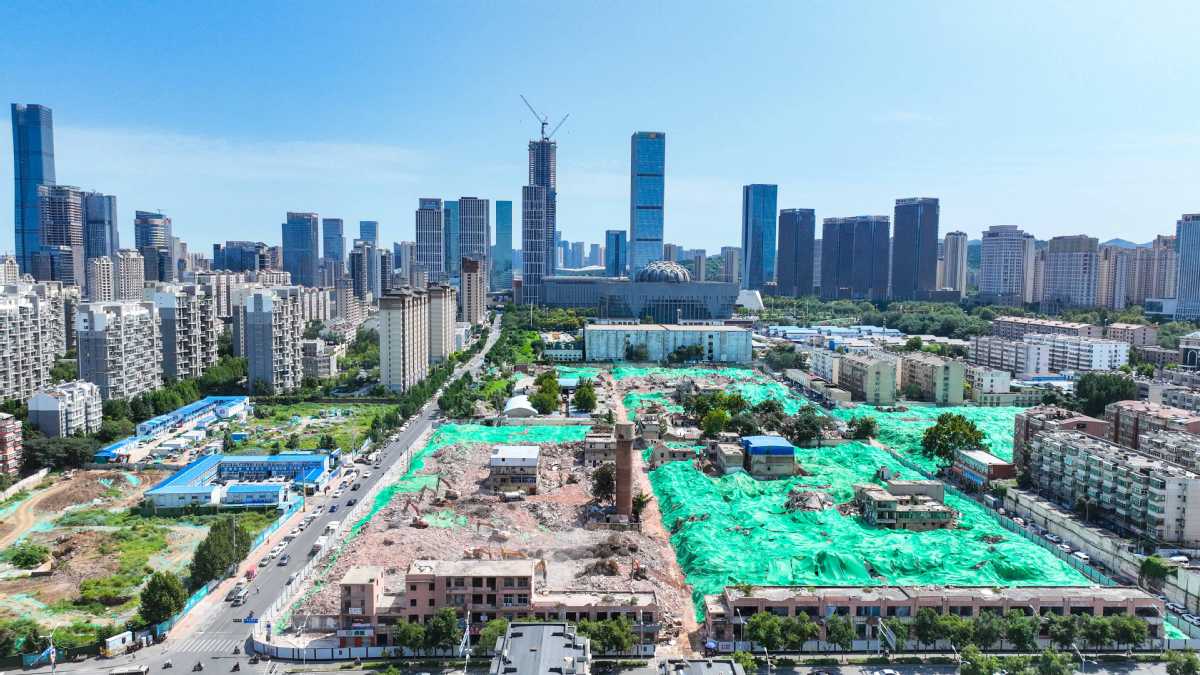

China is expanding its urban village renovation program to nearly 300 cities, up from 35, in a significant policy shift aimed at stabilizing the real estate sector and achieving the country’s annual growth targets, analysts said. The initiative, led by the Ministry of Housing and Urban-Rural Development and the Ministry of Finance, seeks to address suboptimal land use, safety concerns, and inadequate public services in urban villages, with a particular focus on integrating migrant workers and their families into the urban fabric.
The program, which now includes a broader geographical area, also introduces monetary compensation models for displaced residents. This shift from traditional in-kind resettlement allows residents to either receive direct financial compensation, purchase new housing, or move into existing commercial housing units.
China had already initiated a plan to renovate 1 million homes in urban villages and dilapidated housing earlier this year, with 1.7 million homes in need of redevelopment across 35 major cities. The expansion is expected to facilitate the transformation of an additional 1 million homes, significantly increasing the number of eligible projects.
The expanded program includes financial support, such as special government bonds, policy-based loans, and tax incentives. Guangzhou, for instance, recently secured the first specialized urban village redevelopment loan, with China Development Bank and the Agricultural Development Bank of China providing 250 million yuan ($34.54 million) in funding.
Experts say that the monetized resettlement model shortens the transition for displaced residents, allowing them to find alternative housing more quickly. This approach is also expected to absorb existing housing inventory, providing a boost to the housing market. If 1 million homes are monetarily resettled, it could drive significant residential sales, accounting for about 10% of the total market volume, according to a study by the China Index Academy.
The policy is expected to stimulate transaction activity in the housing market through 2025 and may expand further, offering a tangible boost to China’s property market and broader economy.