
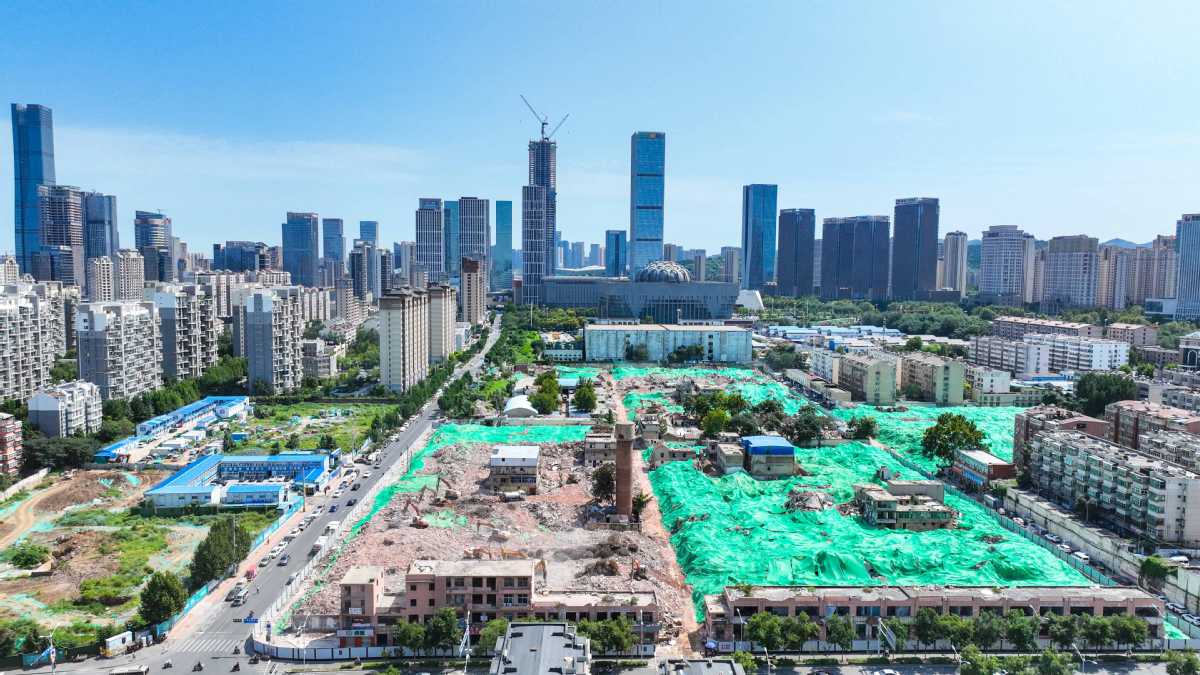

China is broadening its urban village renovation program to nearly 300 cities, up from the previous 35, in a major effort to stabilize the real estate sector and meet its annual growth targets. The policy, announced by the Ministry of Housing and Urban-Rural Development and the Ministry of Finance, will include a shift towards monetary compensation for affected residents.
Urban villages, often located on the outskirts of cities, have emerged due to rapid urbanization, leading to issues such as suboptimal land use, safety concerns, and insufficient public services. This renovation initiative aims not only to improve physical infrastructure and housing but also to integrate migrant workers and their families into the urban environment, promoting more equitable urban development.
The initiative follows the government’s previous move in October to renovate 1 million homes in urban villages and dilapidated housing. With the expansion, another 1 million homes are expected to be redeveloped, contributing to a significant increase in eligible projects. The program will benefit from supportive measures, including special government bond financing, tax incentives, and loans from policy-oriented financial institutions.
Guangzhou in Guangdong province recently secured the first specialized loan for urban village redevelopment, with an initial 250 million yuan ($34.5 million) from China Development Bank and Agricultural Development Bank of China. In another instance, Foshan in Guangdong received a 1.19 billion yuan loan to fund resettlement housing.
The expanded program will employ monetized resettlement models, allowing residents to receive financial compensation and find alternative housing quickly, bypassing the lengthy construction of new units. This approach is expected to stimulate the residential market, with around 100 million square meters of residential sales potentially entering the market, contributing to a 10% increase in overall transaction volume.
Experts anticipate that this influx of demand will help boost property sales, with some resettled units likely contributing to sales by the end of 2024 and throughout 2025. This expanded urban village renovation initiative could further scale up in the future, providing significant support to the real estate sector.