
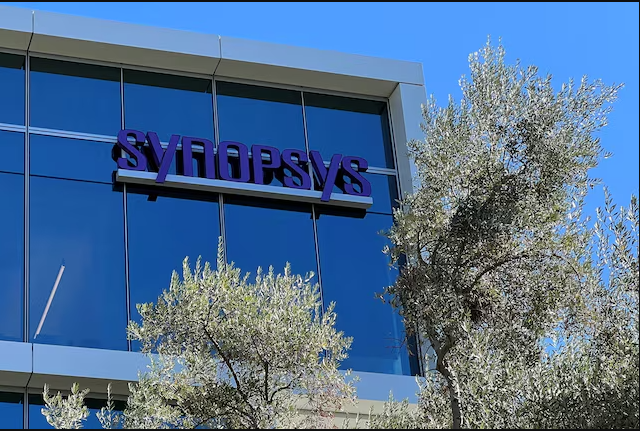

In a significant breakthrough for one of the tech industry’s largest mergers, China’s State Administration for Market Regulation (SAMR) has granted conditional approval for Synopsys Inc.’s $35 billion acquisition of Ansys Inc., removing the final regulatory barrier to the landmark deal.
The green light from Beijing long considered the most unpredictable regulatory checkpoint—comes after months of global scrutiny and intense negotiations. Regulatory authorities in the U.S., European Union, and several other jurisdictions had previously cleared the deal, making China’s approval the last major obstacle.
Conditions Attached
In a statement released Monday, SAMR said it would approve the merger subject to behavioral remedies aimed at maintaining fair competition in the electronic design automation (EDA) and engineering simulation software markets.
Among the key conditions:
- Synopsys must maintain interoperability between Ansys’s simulation tools and third-party software for at least five years.
- The company is prohibited from engaging in exclusive supply arrangements or forcing bundling of software products in the Chinese market.
- SAMR also required firewalls between sensitive customer data, especially for clients operating in sectors deemed strategically important by Beijing.
These requirements mirror China’s recent approach to high-tech mergers, reflecting its concerns over technological dependence and market concentration in areas vital to its long-term innovation goals.
Strategic Implications
Synopsys, a Silicon Valley-based leader in chip design software, and Ansys, a Pennsylvania-based simulation software giant, first announced the all-stock deal in January 2024. The merger is expected to create a dominant force in engineering software, combining Synopsys’s semiconductor expertise with Ansys’s capabilities in mechanical, thermal, and fluid simulation.
The companies argue the tie-up will allow for faster innovation across industries, from aerospace to automotive and advanced manufacturing, especially as product development increasingly relies on integrated digital twins.
“With this final clearance, we’re excited to move forward with a shared vision of accelerating innovation for our customers worldwide,” said Synopsys CEO Sassine Ghazi in a statement following China’s announcement.
Ansys CEO Ajei Gopal echoed the sentiment, adding that the deal will “expand the boundaries of what’s possible in design and simulation.”
Geopolitical Undertones
China’s cautious yet ultimately approving stance is notable given the ongoing tensions between Washington and Beijing over access to advanced technologies, particularly in semiconductors and AI.
Experts say Beijing’s conditional approval signals a pragmatic approach balancing national security concerns with the desire to remain integrated in global technology ecosystems.
“China is walking a tightrope,” said Angela Wei, a technology policy analyst at the AsiaTech Institute in Hong Kong. “They’re asserting regulatory control without fully blocking deals that could be mutually beneficial, especially where Chinese industries rely on global software ecosystems.”
Next Steps
With all major regulatory approvals now secured, Synopsys and Ansys are expected to close the deal by the end of Q3 2025, pending final shareholder and administrative procedures.
The merger, one of the largest in the history of enterprise software, is poised to reshape the landscape of engineering design and it now moves forward with Beijing’s conditional blessing.