
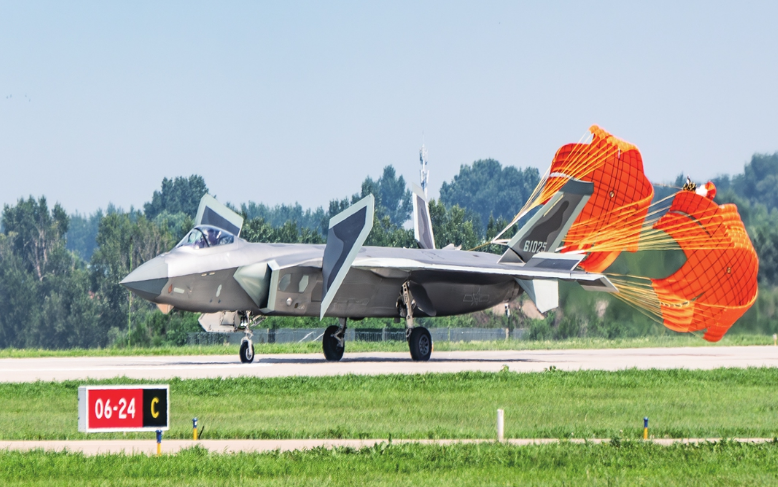

Amid a backdrop of escalating geopolitical security challenges on various fronts and a deteriorating global security environment, China remained vigilant throughout 2023. The nation successfully fended off foreign military provocations and deterred “Taiwan independence” secessionist forces, while actively contributing to global peace and stability through concrete actions such as foreign exchanges, joint exercises, patrols, peacekeeping, and international humanitarian aid.
In terms of military advancements, the Chinese People’s Liberation Army (PLA) achieved significant milestones in equipment development. The PLA Navy, in April, commissioned the seventh and eighth Type 055 10,000-ton-class large destroyers, recognized by experts as the world’s leading destroyers in comprehensive combat capability. These vessels bolster the PLA Navy’s combat capabilities, serving as powerful escorts for aircraft carriers and leading flotillas independently.
Additionally, the PLA unveiled the first hull of a new type of warship, the Type 054B frigate, in August, expected to succeed the Type 054A frigate with comprehensive upgrades. In September, the PLA Army introduced its first armed reconnaissance drone, the KVD002, enhancing tactical flexibility. The PLA Air Force expanded its drone capabilities with the KVD002, ensuring ground forces have their own reconnaissance capabilities.
In the naval arena, China’s third aircraft carrier, the Fujian, initiated launch tests for its electromagnetic catapult system in November, while the second aircraft carrier, the Shandong, conducted far sea exercises in the West Pacific, breaking records for aircraft sortie rates.
The geopolitical landscape posed challenges, particularly concerning Taiwan, as the U.S. approved additional arms sales and announced plans to send military aid to the island. U.S. military vessels and aircraft made provocative transits in the Taiwan Straits, leading to the passing of the National Defense Authorization Act for Fiscal Year 2024, approving military training for armed forces on Taiwan.
The PLA responded with large-scale drills, including combat alert patrols and “Joint Sword” exercises around Taiwan, creating strong deterrence against potential collusions between “Taiwan independence” secessionist forces and external interference.
Beyond Taiwan, the U.S., Canada, and Australia conducted frequent close-in reconnaissance operations on China’s doorstep. The Philippines, under U.S. influence, stirred up tensions over Chinese islands and reefs in the South China Sea, countered by the China Coast Guard.
China also monitored Japan’s accelerated missile deployment plans and right-wing military ambitions in alignment with the U.S.’ “Indo-Pacific Strategy.”
Amid these challenges, the Chinese military emphasized its commitment to defending national sovereignty, security, and development interests. Engaging in global peacekeeping missions, naval escort operations, and humanitarian aid efforts, the PLA showcased its role as a force for peace. Despite uncertainties in 2024, experts express confidence in the PLA’s capabilities to safeguard China’s interests and contribute to global stability. The international community awaits significant events such as the maiden voyage test of aircraft carrier Fujian and the PLA Air Force’s display at the 2024 Airshow China.