
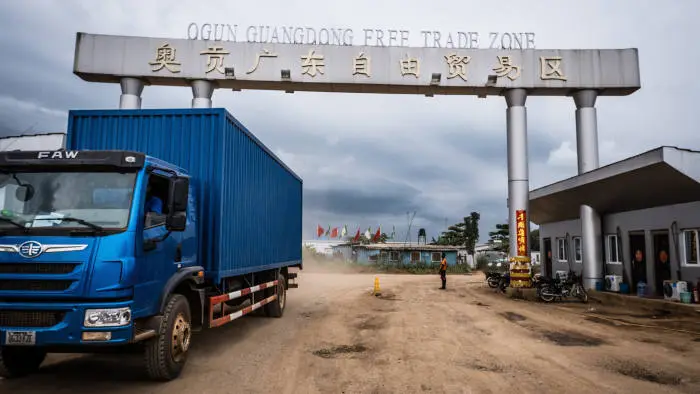

The economic partnership between China and Nigeria has deepened significantly since their formal diplomatic ties were established in 1971. This relationship has facilitated substantial Chinese investment in Nigeria across various sectors, including construction, telecommunications, and oil. Currently, approximately 200 Chinese firms are exploring investment opportunities in Nigeria, reflecting a growing interest in the country’s commercial landscape.
Notable Chinese companies, such as ZTE and Huawei, have established strong footholds in Nigeria’s telecommunications market. ZTE has reportedly sold over 40 million handsets and provides essential equipment to local service providers, while Huawei leads as the primary supplier in the domestic telecommunications sector.
Nigeria also benefits significantly from China’s Belt and Road Initiative (BRI), which has funded critical infrastructure projects, including the Abuja Light Rail Project and the Zungeru Hydroelectric Power Project. Between 2012 and 2022, China’s foreign direct investment (FDI) in Nigeria reached $2.3 billion, highlighting the growing economic ties.
However, the relationship faces challenges, particularly concerning transparency in aid and trade agreements. Critics argue that China’s soft loan conditions, which often require Chinese firms to be selected as contractors, may hinder local economic benefits. This has raised concerns over the long-term impacts of such agreements on Nigeria’s sovereignty and economic stability.
A case exemplifying these tensions is the ongoing dispute between the Ogun State government and Zhongshan Fucheng Industrial Investment Company. Following a bilateral investment treaty signed in 2013, a joint venture was established to create the Ogun Guangdong Free Trade Zone. However, allegations of breach of contract by the Ogun State government have led to legal actions, including a UK court ruling in favor of Zhongshan for £57.8 million in damages, which Ogun State has yet to pay.
In response to these developments, the Chinese firm has sought to seize Nigerian government assets, including two presidential jets, to recover the awarded compensation. This action raises concerns about potential diplomatic repercussions, as it could strain Nigeria-China relations and reinforce the perception of a debt trap associated with Chinese investments.
The Nigerian government has defended its position, arguing that it is not directly involved in the dispute between Ogun State and the Chinese firm. This situation underscores the complexities of Sino-African relations, where investment opportunities must be balanced against potential economic sovereignty risks.
Looking ahead, both nations are encouraged to pursue diplomatic dialogue and renegotiate terms to foster a more favorable business environment. Engaging international financial institutions may also be beneficial in mediating disputes and ensuring that the economic relationship continues to thrive for the mutual benefit of both countries.
Feel free to let me know if you need any further adjustments!