
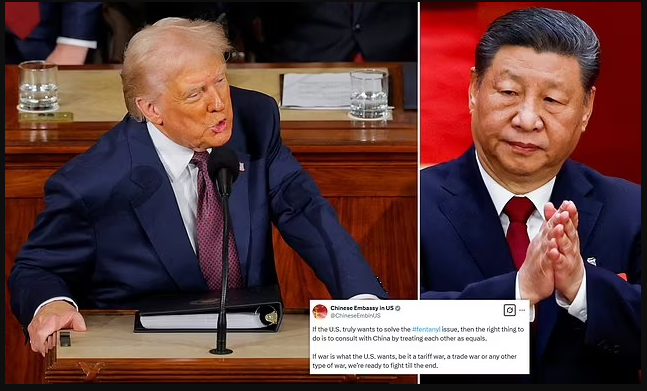

In a sharp and forceful response to former President Donald Trump’s decision to impose tariffs on Chinese goods, Beijing has issued a stark warning to Washington, accusing the U.S. of using “pressure and threats” to further its economic agenda. The statement from China’s Ministry of Commerce came as part of a broader condemnation of U.S. trade policies that Beijing argues undermine fair competition and violate international norms.
The tariffs, first introduced under the Trump administration, were part of a broader strategy to address what the U.S. considered unfair trade practices by China. These measures have caused significant disruption in global markets and strained the economic relationship between the two superpowers, with China hitting back with retaliatory tariffs of its own.
“Washington must immediately correct its course, halt its bullying tactics, and stop using tariffs as a weapon in international trade,” said a spokesperson for China’s Ministry of Commerce in a statement released today. The warning is the latest in a series of public rebukes aimed at the U.S. as Beijing continues to grapple with the fallout from the ongoing trade war.
Experts suggest that the escalating rhetoric could have far-reaching consequences, especially as both countries remain at odds over issues like intellectual property theft, trade imbalances, and China’s economic policies. While some analysts argue that the tariffs were necessary to level the playing field, others warn that continued aggression could harm not only bilateral relations but also global economic stability.
The Biden administration has yet to issue an official response to China’s latest remarks, but the tensions between the two nations remain a key issue in global diplomatic and economic discourse.
As negotiations continue, the international community watches closely, hoping for a resolution to what has become one of the most significant trade disputes in recent history.
source: unilad.com