
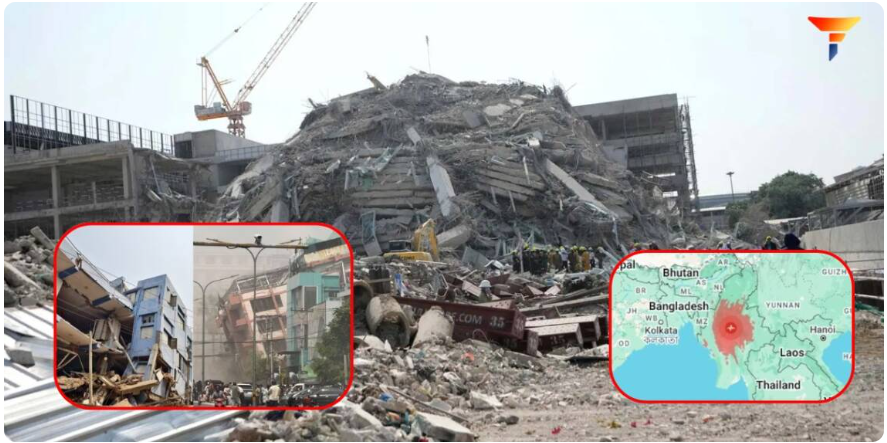

In a significant show of regional solidarity, China has pledged US$137 million in humanitarian aid to Myanmar following a powerful earthquake that struck the country earlier this week, leaving hundreds dead, thousands displaced, and critical infrastructure in ruins.
The announcement, made by China’s Foreign Ministry on Thursday, positions Beijing as one of the largest international donors responding to the disaster. The relief package includes emergency medical supplies, food, temporary shelters, and a commitment to help rebuild hospitals, schools, and roads in some of the worst-hit regions.
“Our hearts are with the people of Myanmar during this difficult time,” said Chinese Foreign Ministry spokesperson Wang Wenbin. “China and Myanmar are close neighbors with a deep bond. We stand ready to provide whatever support is needed to help the country recover and rebuild.”
A Humanitarian Response with Strategic Undertones
While the aid is being welcomed across Myanmar and by international observers, analysts also see Beijing’s move as part of a broader strategy to solidify its influence in the region, especially as Western nations remain cautious in engaging with Myanmar’s military-led government.
“China is filling both a humanitarian need and a geopolitical vacuum,” said Dr. Aye Chan, a Yangon-based political analyst. “This aid not only strengthens its ties with Myanmar but also reinforces its image as a reliable regional power.”
The earthquake, measured at 7.1 on the Richter scale, struck central Myanmar on Monday, toppling buildings and triggering landslides in remote, mountainous areas. Rescue operations have been hampered by damaged roads and ongoing political instability in parts of the country.
The United Nations estimates that over 200,000 people have been affected, with urgent needs for clean water, medical care, and shelter. Several countries, including India, Japan, and Thailand, have also offered aid, but China’s contribution stands out in scale and speed.
On-the-Ground Support and Infrastructure Commitments
In addition to immediate relief, China has announced plans to send technical teams and engineers to assist with long-term reconstruction. State-run Chinese construction firms are expected to play a central role in rebuilding collapsed bridges, public buildings, and energy facilities.
The move is consistent with Beijing’s broader Belt and Road Initiative (BRI) projects in Myanmar, which have included investments in rail, port, and pipeline infrastructure. Some critics argue that China’s aid efforts could further entrench its economic footprint in Myanmar, particularly in resource-rich regions.
Myanmar’s Response
Myanmar’s State Administration Council, the ruling military-led body, expressed “deep appreciation” for China’s swift response and called the aid a “testament to enduring friendship and mutual respect.” Local media outlets closely aligned with the military have given prominent coverage to the Chinese assistance, further highlighting the diplomatic importance of the gesture.
A Test of Soft Power
As global attention turns to Myanmar’s unfolding humanitarian crisis, China’s timely intervention may enhance its soft power in Southeast Asia at a moment of intense geopolitical competition. For the people of Myanmar, however, the priority remains survival and recovery.
As aftershocks continue and the death toll climbs, the international community will be watching closely not just how much aid is given, but how it is delivered and by whom.
source: channelnewsasia.com