
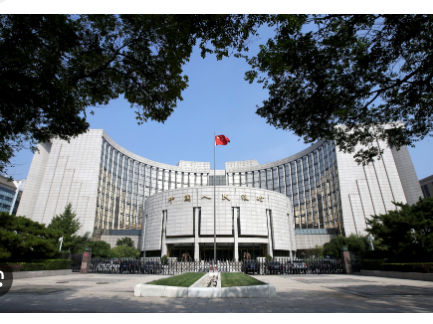

In an effort to bolster the stability of its currency amid economic challenges, China announced on Thursday an adjustment to a key parameter in its macro-prudence management. The parameter, which sets the ceiling on outstanding cross-border financing for institutions, was raised from 1.25 to 1.5. The move aims to enable domestic firms to take on more foreign debt and enhance their ability to raise funds through multiple channels, thus optimizing their balance sheets.
According to a joint statement by the People’s Bank of China and the State Administration of Foreign Exchange, the decision is expected to expand channels for domestic enterprises to raise funds overseas and increase the liquidity of the US dollar in the Chinese mainland market. This, in turn, will help alleviate the depreciation pressure on the yuan and maintain a stable foreign exchange market.
Following the central bank’s announcement, the onshore yuan strengthened by around 400 basis points (bps) against the US dollar, reaching 7.1755 at 6 pm on Thursday. The offshore yuan also rose by over 500 bps to reach 7.1784.
The adjustment is seen as an effort to support the real economy and coordinate domestic and international resources. It will make it easier and more cost-effective for Chinese companies to raise cross-border financing, facilitating better alignment between domestic and international markets.
China’s ongoing efforts to open up its financial sector, including securities, bonds, and derivatives, have maintained balance in cross-border capital flows. Analysts note that this continuous opening-up policy will contribute to the long-term stability of the yuan.
The central bank still possesses various tools to address fluctuations in the yuan’s value, such as reserve requirements for foreign currency deposits, countercyclical adjustments, and issuing central bank bills.
Liu Guoqiang, deputy governor of the central bank, expressed confidence in the stability of the foreign exchange market, citing China’s sound economic fundamentals, a moderate current account surplus, and sufficient foreign exchange reserves as supporting factors.
Experts predict that as the US Federal Reserve’s interest rate hikes near an end, the US Dollar Index may weaken, potentially easing depreciation pressure on the yuan. Economic rebound in the second half of the year could also strengthen the yuan’s exchange rate to above seven against the US dollar by year-end.
In addition to the adjustments to the macro-prudence parameter, China has taken further steps to stabilize the yuan, including issuing central bank bills in the Hong Kong market and planning to issue yuan-denominated treasury bonds in August. These measures seek to absorb yuan funds in the offshore market, push up short-term interest rates, and increase the costs of shorting the yuan.
The coordinated efforts between China’s fiscal and monetary policies are expected to stabilize the yuan at an equilibrium level while supporting economic recovery momentum.