

China’s economic growth is forecasted to rebound, reaching approximately 5 percent in 2024, as shared by Li Daokui, Director of Tsinghua University’s Academic Center for Chinese Economic Practice and Thinking, in an interview with the Global Times on Saturday. This positive outlook comes after a sustained period of declining GDP growth since 2009.
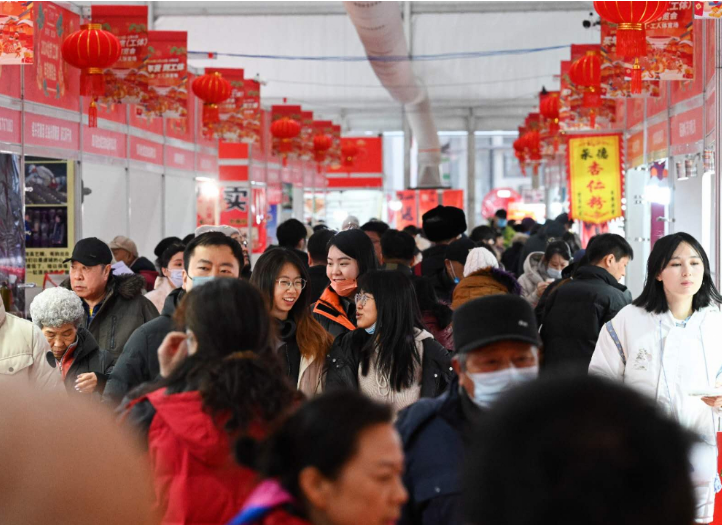
Li identified two key focal points for the economy in 2024—whether the consumption sector can achieve new heights during the May Day holidays and whether the property sector will stabilize by the year’s end. Emphasizing that China remains a growing economy with untapped potential, he underscored the need to explore further avenues for development.
By the conclusion of 2023, China’s total GDP had reached 126 trillion yuan ($17.67 trillion), marking a 5.2 percent year-on-year increase and successfully meeting the previous year’s annual growth target of around 5 percent, according to data from the National Bureau of Statistics released on Wednesday.
The annual Central Economic Work Conference (CEWC) held in Beijing in December emphasized the necessity of upholding high-quality development as a steadfast principle for the new era. Li highlighted the conference’s significance, noting that the proposal to prioritize “high-quality development” and related policies are crucial for reversing the trend of actual GDP growth rates falling below potential.
Li expressed confidence in the Chinese economy but acknowledged the existence of “long-term problems” that impede its full potential. He identified the need to address social governance practices emphasizing standardization and order, which, over the past decade, have had a constraining effect on economic development. Adjusting the country’s macro-policy direction in a timely manner is essential, according to Li.
While acknowledging China’s robust production and innovation capacity, with a substantial annual influx of graduates contributing to innovation and accelerated growth, Li pointed out issues related to effective demand. This includes lower enterprise margins, lackluster stock market performance, and spending contraction, which he believes stems from a need to shift fiscal policies towards stimulating consumer spending.
Li proposed specific measures, including assisting migrant workers in settling down in urban areas by facilitating home purchases, ensuring access to education for their children, and offering subsidies for parents residing in rural areas. Additionally, he suggested reducing consumption restrictions for middle-income groups in cities and providing support for families willing to have more children.
Regarding the housing market, Li anticipates continued adjustments in 2024, with property investment focused primarily on first-tier and quasi-first-tier cities. He noted that these cities are expected to gradually relax housing purchase restrictions, and those experiencing population influx, such as Xi’an and Changsha, may see positive developments in the property sector.