
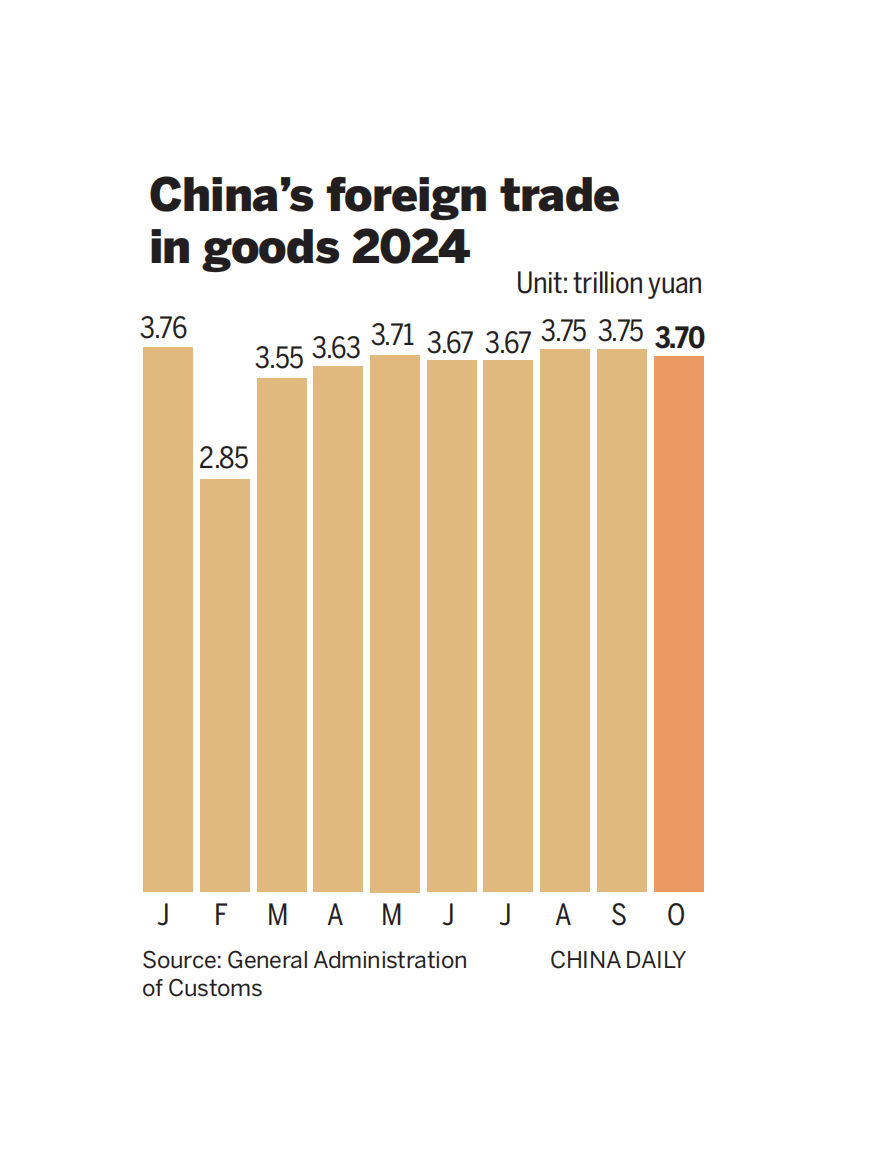

China’s foreign trade surged by 5.2% year-on-year to reach 36.02 trillion yuan ($5.03 trillion) in the first ten months of 2024, with exports rising 6.7% to 20.8 trillion yuan, according to data from the General Administration of Customs. This growth is underpinned by policies designed to maintain trade momentum, with expectations that the country will meet its annual trade growth targets.
Despite the positive performance, experts caution that exporters should prepare for potential challenges in the remainder of the year, including higher tariffs and trade remedy measures from other nations. These could stem from ongoing geopolitical tensions and shifting global trade policies. To mitigate risks, analysts advise Chinese exporters to enhance product competitiveness and expand into emerging markets.
In particular, China’s exports of electromechanical products, including electric vehicles, lithium-ion batteries, and integrated circuits, have seen a robust 8.5% rise, reaching 12.36 trillion yuan. This sector now accounts for nearly 60% of China’s total exports.
Firms like Hisense Ronshen (Yangzhou) Refrigerator Co are responding to market volatility by expanding their presence in emerging markets such as Indonesia, Brazil, Saudi Arabia, and Kazakhstan, where demand for products like large-capacity refrigerators is growing.
Experts warn that protectionist policies, geopolitical instability, and supply chain disruptions remain key risks. However, with ongoing urbanization and industrialization in many countries, global demand for China’s tech-intensive green products could continue to drive export growth.
China is also working to strengthen trade relations with the US, seeking to resolve differences and enhance cooperation for mutual benefit. As global economic challenges persist, Chinese officials emphasize the importance of open cooperation to sustain trade stability and growth.