
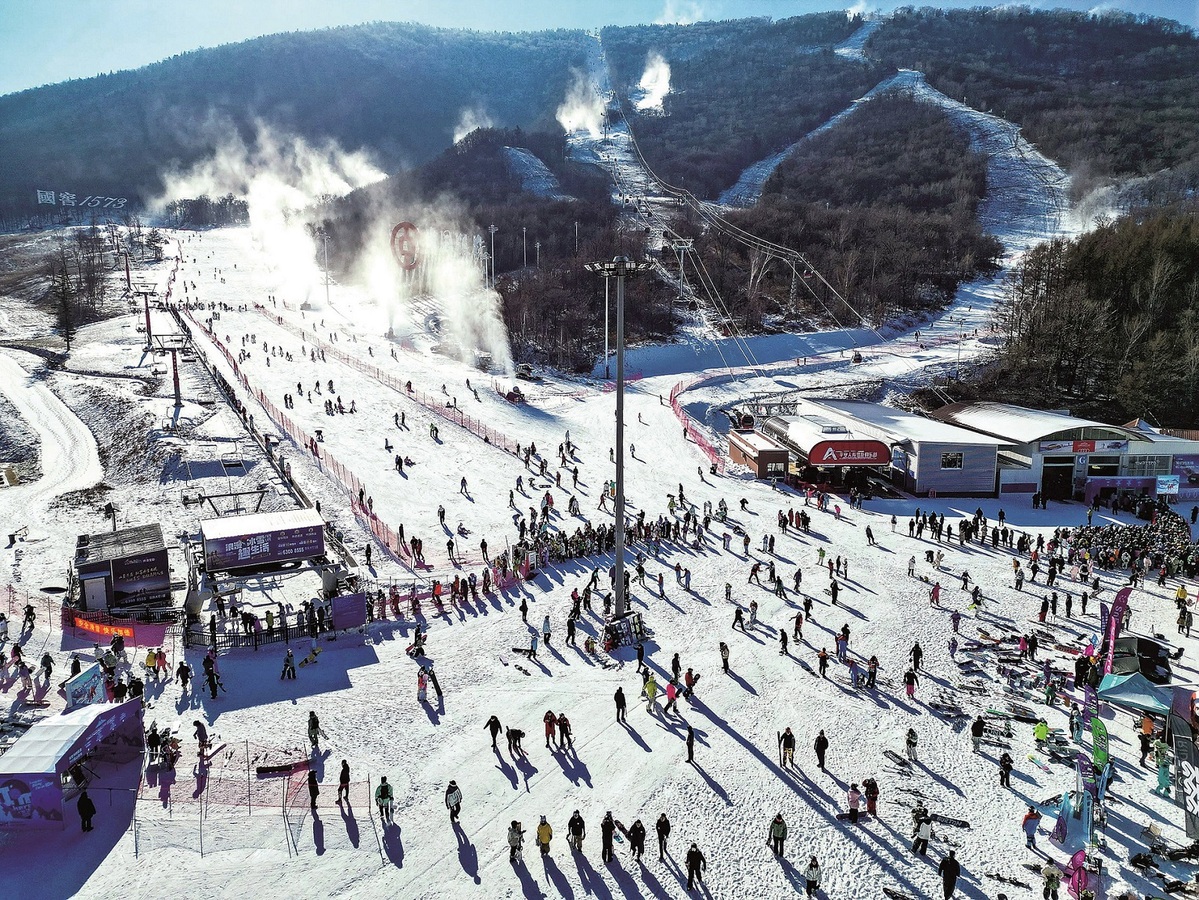

China’s ice and snow economy is experiencing significant growth, transforming its natural “cold resources” into a vibrant and lucrative sector. With expanding ski resorts, increasing skier visits, and strong government support, snow tourism is creating new opportunities across the country, especially as winter sets in.
One example of this trend is Zhao Yin, a 28-year-old marketing professional from Shanghai, who visited the Songhua Lake Ski Resort in Northeast China’s Jilin province in late November. Zhao, an avid snowboarder, enjoyed her trip with friends, spending around 3,000 yuan ($412), thanks to seasonal discounts on flights, ski fees, and local consumption coupons. She noted that the experience of being in nature and focusing on the present moment made the trip particularly enjoyable.
Zhao, who occasionally hires private instructors to improve her snowboarding skills, emphasized that each trip taught her something new, making the sport even more rewarding. Her experience is indicative of the broader growth in winter sports participation, fueled by increased interest in skiing and snowboarding across China.
According to Wu Bin, the founder and CEO of Beijing Snowpal Enterprise Management Co Ltd, there has been a surge in demand for skiing, driving growth in the ice and snow tourism industry. The China Ski Industry White Book (2023-24), released in November, reported a 16.3 percent increase in skier visits for the fiscal year ending on April 30, 2024, with 23.08 million visits compared to 19.83 million the previous year. Additionally, the number of individual skiers grew by 14.5 percent to 12.8 million, and the per capita skiing frequency rose slightly to 1.8 times from 1.77 times in the previous year.
This growing interest in winter sports, coupled with the development of ski resorts and government investment in infrastructure, underscores the thriving ice and snow economy in China. The trend is expected to continue as more individuals discover the excitement and health benefits of skiing and snowboarding.