
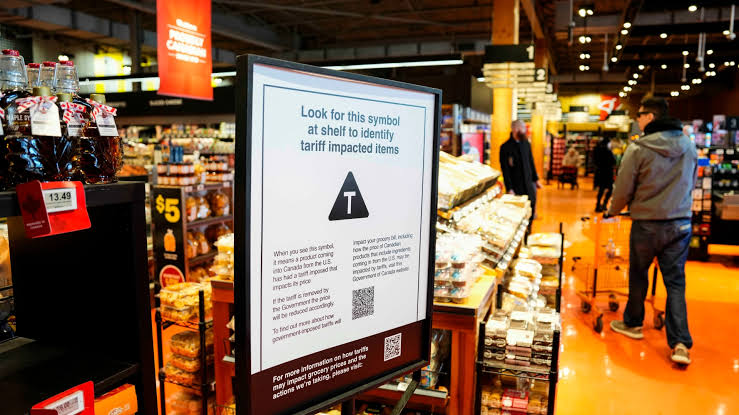

As tensions between the U.S. and China escalate, Chinese investors are bracing for a turbulent start to the week. The U.S. government’s decision to impose additional tariffs on Chinese imports has triggered fresh concerns about the future of global trade, further deepening the already strained economic relationship between the two countries. Analysts are forecasting significant market volatility, and some fear the repercussions could lead to a broader economic slowdown.
U.S. Tariffs Spark Renewed Fears
The latest wave of tariffs, which are expected to hit a wide range of Chinese products, has raised alarms across key sectors. With Beijing poised to retaliate, the risk of an all-out trade war looms large, making the Monday market opening in China a pivotal moment for investors. In anticipation of further escalation, Chinese businesses reliant on exports could face rising costs and shrinking profit margins, especially in industries like electronics, automotive, and machinery.
For many Chinese investors, the trade conflict has become a persistent source of uncertainty. The impact of U.S. tariffs has already been felt across the market, with stock prices in export-dependent sectors suffering sharp declines. The uncertainty surrounding this ongoing trade dispute has compounded concerns about the slowing Chinese economy, which has been grappling with challenges such as declining consumer spending and an over-leveraged corporate sector.
Economic Slump and Weakening Yuan
Beyond the tariff dispute, China’s economy faces a range of internal pressures. Growth has slowed significantly in recent years, and the yuan’s depreciation against the U.S. dollar has added to investor apprehension. While the Chinese government has implemented stimulus measures in an attempt to stabilize the economy, the effectiveness of these measures is increasingly called into question as the global economic landscape grows more unpredictable.
Investor sentiment has also been weighed down by concerns over China’s mounting debt levels, particularly in local governments and state-owned enterprises. This has resulted in a cautious approach by many investors, as they seek shelter in less risky assets like gold or government bonds, anticipating a rough ride ahead for Chinese stocks.
Potential for a Tit-for-Tat Escalation
The looming U.S. tariffs have sparked fears of a retaliatory response from Beijing. Chinese officials are widely expected to impose tariffs on American goods, particularly targeting agricultural products like soybeans and pork, as well as high-tech industries where China has a competitive edge. This tit-for-tat escalation could result in significant disruptions to global supply chains, particularly in sectors reliant on cross-border manufacturing, such as technology and consumer electronics.
Such developments are expected to add even more pressure on the Chinese stock market, which has already been reeling from months of uncertainty. Investors are anxious about the potential ripple effects throughout Asia and the global economy, particularly in light of weak demand in key markets such as Europe and North America.
The Chinese Government’s Response
Although Beijing has not yet unveiled its official response, experts predict that further fiscal stimulus could be in the cards. This could include measures aimed at bolstering domestic consumption, easing credit conditions, and supporting key sectors such as technology and manufacturing. However, given the current trade environment, many are questioning the ability of such measures to stem the tide of economic challenges, particularly with the U.S. continuing to ramp up pressure.
Moreover, the Chinese government will likely face increased scrutiny over its long-term strategy, particularly as it seeks to balance domestic priorities with the demands of maintaining a stable relationship with the U.S. and other global powers. Analysts suggest that China may also look to deepen economic ties with other countries, especially those in the Asia-Pacific region, to mitigate the risks posed by a continued trade war with the U.S.
Investor Sentiment: Preparing for a Rocky Week
With the threat of further tariffs hanging over the market, Chinese investors are bracing for a rocky start to the week. While some may seek refuge in gold or the relative safety of government bonds, others are looking for opportunities in sectors less affected by the trade conflict. However, the overall mood is one of caution, as the uncertain path ahead and potential for further trade retaliation leaves little room for optimism in the short term.
As the situation unfolds, eyes will be fixed on the U.S. and China, with both governments seemingly unwilling to back down. In the meantime, markets on both sides of the Pacific will continue to grapple with the fallout from this ongoing trade war, which has proven to be one of the defining economic challenges of the 21st century.
source: bnnbloomberg.ca