
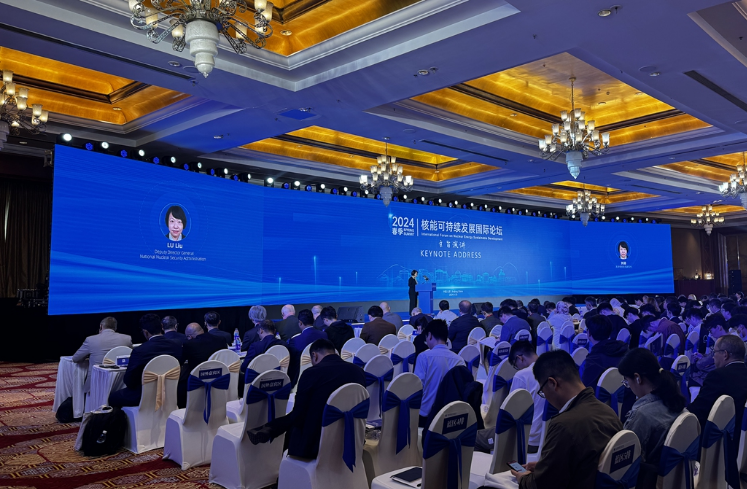

China leads global nuclear power construction with 26 units underway by the end of 2023, boasting a total capacity of 30.3 GW. However, a report from the China Nuclear Energy Association (CNEA) points out a disparity between nuclear power capacity and the requirements to meet the nation’s “dual carbon” goals.
The report suggests that strategically locating nuclear power projects in central provinces, where electricity supply gaps are pronounced, could optimize nuclear power plant layouts and contribute to national energy objectives.
In 2023, China’s commercial nuclear power units operated safely and stably, with two new units added, bringing the total to 55 units with a capacity of 57.03 GW, ranking third globally. Nuclear power currently generates 4.86 percent of China’s total electricity, reducing annual carbon dioxide emissions by 340 million tons, according to Wang Yiren, the chief expert behind the report.
Commercial nuclear power units are spread across eight provinces, primarily in coastal areas, with Guangdong, Fujian, and Zhejiang leading in installed capacity. The report emphasizes the significant contribution of nuclear power to provincial energy generation, with percentages exceeding 20 percent in Fujian, Liaoning, and Hainan provinces.
Challenges in nuclear power development include capacity disparities, inadequate layout planning, and limited comprehensive nuclear energy utilization. To address these issues, the report advocates for optimizing nuclear power layouts by initiating projects in central provinces with electricity supply gaps.
Shu Yinbiao, a consultant from State Grid Corporation of China, suggests commencing pre-project and construction work for nuclear power projects in central regions around 2030. He underscores the importance of integrating nuclear power into the energy mix for sustainable and low-carbon energy supply, especially in areas lacking wind and solar energy resources.
While advocating for coastal nuclear power projects, Shu also emphasizes the role of nuclear power in supporting energy supply in the northwest region, integrating with renewable energy sources and energy storage for grid development.
Zhang Tingke, CNEA secretary-general, anticipates nuclear power’s contribution to China’s power structure increasing to around 10 percent by 2035, resulting in significant carbon dioxide emission reductions.
The report also suggests integrating nuclear power into existing low-carbon trading systems to recognize its clean energy attributes. China’s nuclear power development aligns with global trends toward clean energy adoption to meet climate goals and ensure energy security.
Emphasizing nuclear safety as paramount, Zhang highlights China’s commitment to stringent safety measures, reflected in its superior WANO comprehensive index scores compared to other major nuclear power countries in 2023. The report recommends legislative efforts to enhance nuclear safety management and public awareness of nuclear power.