
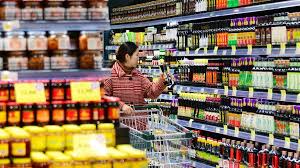

China is set to introduce a series of new policies aimed at supercharging domestic demand as part of its efforts to address escalating external challenges, including trade tensions and global uncertainties. Analysts expect these measures to drive growth in domestic consumption, with a particular focus on ultra-long special treasury bonds targeting consumption and expanding trade-in programs across a broader range of product categories.
Key Focus: Stimulating Consumption and Improving Investment Efficiency
The Central Economic Work Conference recently underscored the importance of boosting domestic demand, which is now a top priority for the government. In response to increasing external pressures, the meeting highlighted the need for policies that will enhance consumption and improve investment efficiency, ensuring sustainable economic development amid ongoing global volatility.
Sheng Qiuping, Vice-Minister of Commerce, explained that amid external uncertainties, China aims to strengthen domestic demand by promoting the integrated development of domestic and international trade. This strategy is expected to smooth the transition between the two markets and provide substantial support to China’s economic goals.
Ultra-Long Special Treasury Bonds for Consumption
A key part of the government’s strategy to boost consumption involves a doubling of ultra-long special treasury bonds, aimed at promoting domestic spending. These bonds, designed to inject funds directly into the consumer market, will see their total value rise significantly from the current range of 100 billion yuan-150 billion yuan ($13.7-$20.6 billion) to an estimated 200 billion yuan-300 billion yuan in 2024.
Yu Xiang, Chief Analyst at CITIC Securities, emphasized that this surge in treasury bond issuance will help stimulate retail consumption, particularly in sectors such as consumer electronics and home furnishings. By 2025, these categories are expected to be included in the government’s trade-in program. The trade-in policy, which allows consumers to exchange old products for subsidies on new ones, has already had a noticeable impact on various retail sectors.
Impact of Trade-In Policies on Retail Sales
The trade-in policy has been particularly successful in boosting retail sales in sectors such as household appliances, furniture, and automobiles. According to the National Bureau of Statistics, retail sales of consumer goods in November 2024 amounted to 4.3763 trillion yuan, marking a 3% year-on-year increase. From January to November, total retail sales of consumer goods reached 44.2723 trillion yuan, showing a 3.5% increase from the previous year.
The China International Capital Corp Ltd estimates that fiscal subsidies for the trade-in program in the fourth quarter of 2024 could reach 120 billion yuan, with further expansions expected next year. Potential areas for expansion include communication products, small household appliances, and consumer electronics.
Expanding the Scope of Trade-In Programs
As part of its efforts to increase consumer spending, the government aims to broaden the scope of trade-in policies. Sheng Qiuping mentioned that collaborating with the National Development and Reform Commission (NDRC) and other relevant authorities would be critical in ensuring that more consumers benefit from these programs. These efforts could extend to a wider range of products, including digital consumption, new energy vehicles, and green smart home appliances.
New Forms of Consumption
To maintain momentum, China is also focusing on developing new forms of consumption. Sheng highlighted several strategies aimed at stimulating retail vitality:
- First-launch economy: Encouraging businesses to introduce new products, models, and technologies, as well as opening flagship stores.
- Digital consumption: Promoting e-commerce and online platforms to boost sales in the digital space.
- Green consumption: Encouraging the purchase of new energy vehicles and eco-friendly products.
- Ice and snow economy: Stimulating consumption related to winter sports, such as skiing and ice skating, which aligns with China’s growing interest in winter sports post-Olympics.
- Silver economy: Catering to seniors by providing products and services designed for an aging population.
Services Consumption: A Growing Focus
While much of the emphasis has traditionally been on goods consumption, experts like Wang Yiming, Vice-Chairman of the China Center for International Economic Exchanges, argue that the focus should now shift to services consumption. Wang pointed out that the goods consumption market may be nearing saturation, with the need for policy attention to increasingly diverse service consumption demands across various demographic groups.
To address this shift, policymakers will need to overcome institutional barriers and encourage innovative services tailored to different consumer needs. This will require enhanced collaboration between the government and private enterprises, as well as reform of the services sector to create a more vibrant and diversified market.
Boosting Consumer Confidence
In addition to policy measures, experts stress the importance of improving the business environment and consumer confidence. Wei Jianguo, former Vice-Minister of Commerce, called for bold reforms to stimulate consumption, including optimizing services for enterprises, fostering innovation in consumption scenarios, and addressing barriers in the eldercare, health, and cultural tourism sectors.
Conclusion: A Comprehensive Approach to Boosting Domestic Demand
The Chinese government is positioning domestic demand as a cornerstone of its economic growth strategy, with a comprehensive set of policies designed to stimulate consumption across various sectors. From the introduction of ultra-long treasury bonds to the expansion of trade-in programs and the promotion of new forms of consumption, these measures aim to provide immediate support to businesses and consumers alike.
As the country moves into 2025, services consumption is expected to become an even more critical focus, with the potential for significant growth in sectors like eldercare, healthcare, and digital services. The government’s multi-pronged approach to stimulating consumption and improving the overall economic environment will play a crucial role in sustaining China’s growth and addressing the challenges of an increasingly uncertain global landscape.