
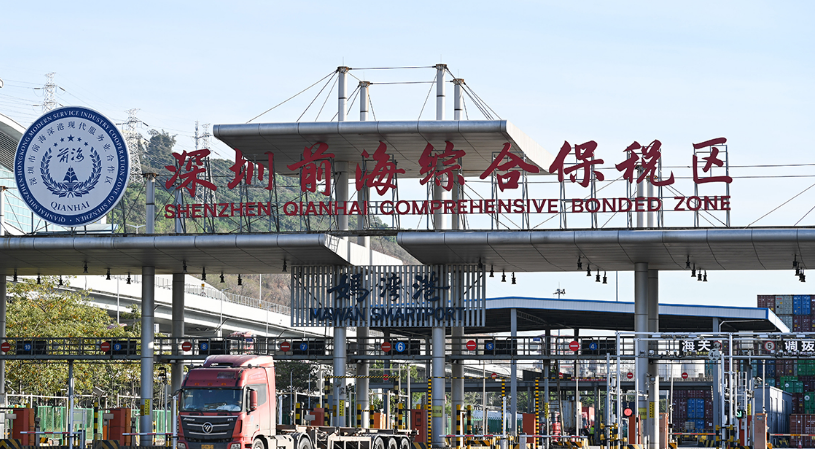

As December ushers in one of the busiest periods for the Qianhai and Shekou Area, part of the China (Guangdong) Pilot Free Trade Zone in Shenzhen, the bustling scenes exemplify the “Shenzhen speed” – the rapid transformation from a fishing village to a global metropolis. Marking the 45th anniversary of China’s reform and opening-up, the port area’s exponential growth underlines the astounding achievements since the Shekou industrial zone’s construction began in 1979, heralded as the “first shot” of this transformative era.
China’s reform and opening-up, initiated in December 1978 during the 11th CPC Central Committee’s third plenary session, paved the way for remarkable progress. Over the past 45 years, China’s GDP surged from $149.54 billion in 1978 to about $18 trillion in 2022, making it the world’s second-largest economy. The annual average growth rate exceeded 9 percent, and over 800 million people were lifted out of poverty.
Economists emphasize that China’s success provides a model for developing countries, emphasizing reliance on local resources and realities. Per capita disposable income in urban areas rose from 343 yuan in 1978 to 36,883 yuan in 2022, showcasing improved lives for the Chinese people.
China’s continued commitment to reform and opening-up post-2012 has sustained its position as the world’s second-largest economy, top manufacturing power, and leading trader. The nation leads in Fortune 500 companies, 5G stations, broadband users, high-speed railways, and highways.
China’s economic miracle has extended global contributions, with an annual GDP growth rate averaging 6.6 percent between 2013 and 2021. Its contribution to global growth outpaced the G7 countries’ combined efforts. Additionally, China’s vast market and open policies have provided significant opportunities for global businesses.
Foreign companies, such as McDonald’s, have thrived in China since its first mainland restaurant opened in Shenzhen in 1990. McDonald’s plans to expand its current 5,600 restaurants to 10,000 by 2028, showcasing confidence in China’s future development.
Foreign businesses, including high-tech firms, continue to explore and expand in China, attracted by the nation’s potential and favorable business environment. With ongoing efforts to deepen reform and open high-level opportunities, China’s commitment to new technologies, digital economy, and green development propels the nation’s growth engine. The recently concluded Central Economic Work Conference emphasized the importance of strengthening endogenous driving forces through continued reform and opening up, removing barriers for foreigners to conduct business, study, and travel in China.