
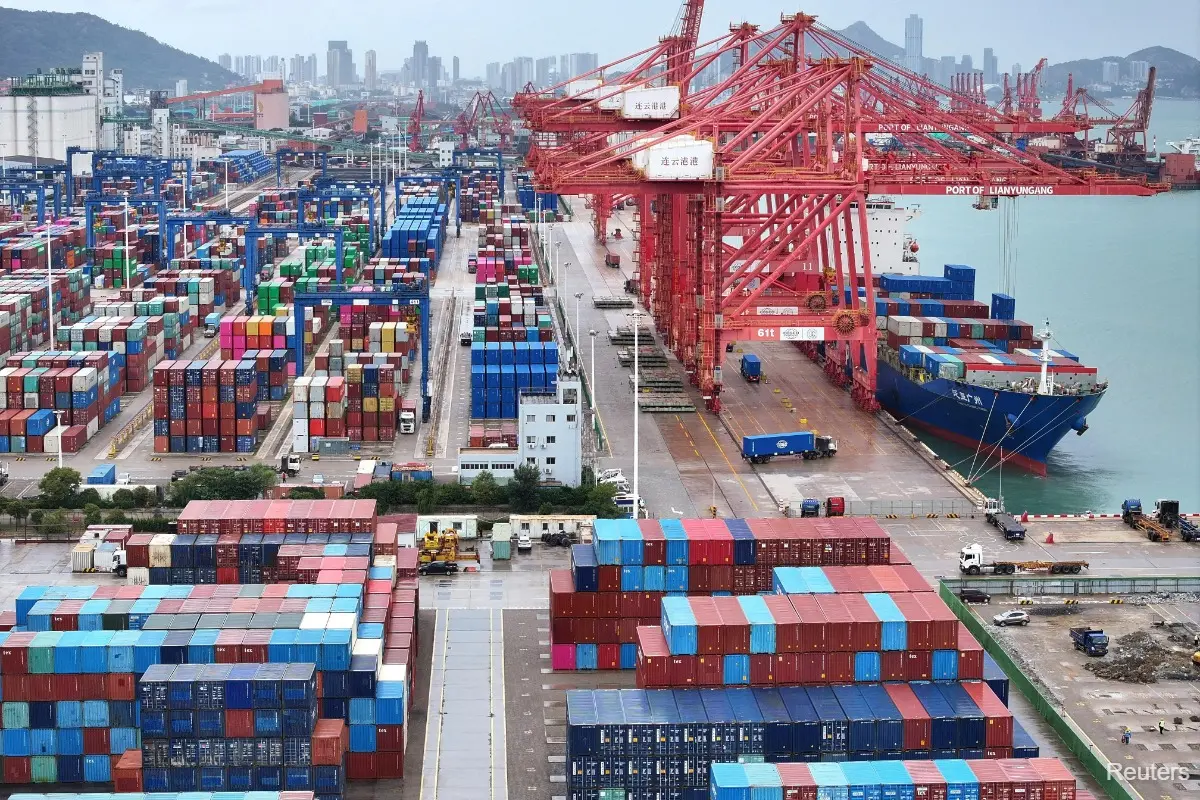

China’s exports to the United States have recorded their sharpest year-on-year drop since 2020, highlighting mounting trade tensions, shifting global supply chains, and weakening U.S. demand.
According to the latest customs data released Monday by China’s General Administration of Customs, exports to the U.S. tumbled 18.3% in May compared to the same month a year earlier. This marks the largest monthly decline in five years, surpassing the sharp contractions seen during the early months of the COVID-19 pandemic.
Analysts point to a confluence of factors behind the slump. These include continued tariffs on Chinese goods, tighter U.S. scrutiny of technology imports, a push for supply chain diversification by American companies, and a cooling in consumer demand amid economic uncertainty in the U.S.
“This is not a short-term blip,” said Chen Yi, a trade economist at Renmin University. “What we’re seeing is a structural shift, as geopolitical tensions and the reconfiguration of supply chains begin to bite.”
The data also revealed a broader slowdown in China’s global trade, with total exports down 7.6% year-on-year in May. However, the U.S. market saw the steepest decline among all major trading partners, underscoring a deepening economic decoupling between the world’s two largest economies.
In Washington, the Biden administration has maintained tariffs imposed during the Trump era while unveiling new incentives to encourage domestic manufacturing and reduce reliance on Chinese suppliers. especially in sectors such as semiconductors, electric vehicles, and clean energy components.
Meanwhile, Chinese manufacturers have increasingly turned to alternative markets, including Southeast Asia and Latin America, to offset falling demand from the U.S. But analysts caution that these markets cannot fully replace the scale of American consumption.
Despite the export setback, China reported a modest trade surplus in May, driven by a sharper drop in imports. However, the export decline raises fresh concerns about China’s fragile post-pandemic recovery, which has been hampered by weak domestic consumption, a sluggish property sector, and deflationary pressures.
Beijing has pledged more support for exporters and manufacturers, including tax incentives and expanded trade agreements under the Belt and Road Initiative. Still, economists warn that without a breakthrough in U.S.-China relations or a significant pickup in global demand, the road ahead may remain bumpy for China’s export engine.
source: politicalwires.com