

Chinese analysts have forecasted on Thursday that despite some signs of stabilization, China-US relations are likely to remain turbulent in 2024. This prediction arises from expectations that the United States will persist in its US-centric and hegemonic approach to international order, dealing with China accordingly.
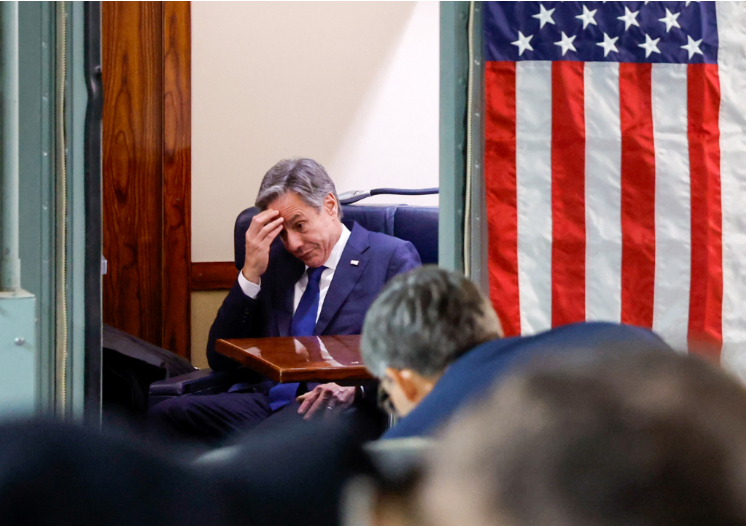
US Secretary of State Antony Blinken, in Wednesday’s annual press briefing, emphasized that the US will engage with China “from a position of strength,” as outlined in a press release on the State Department’s website. Blinken highlighted strengthened partnerships in the Indo-Pacific, citing enhanced trilateral frameworks with Japan and South Korea, the AUKUS pact with the UK and Australia, upgraded comprehensive strategic partnerships with Vietnam and Indonesia, a military pact with the Philippines, new embassies in Solomon Islands and Tonga, and the Quad alliance.
While noting achievements in reducing the risk of conflict, such as the November meeting between the two heads of state, resumption of cooperation on drug control, and communication between the two militaries, Blinken’s remarks were criticized as reflective of a US-centric and divisive worldview. Li Haidong, a professor at the China Foreign Affairs University, stated that the US continues to handle international affairs, including its policy toward China, from a position of absolute advantage.
Analysts interpret the US approach as an attempt to maintain dominance in the Asia-Pacific region and globally, directing allies to suppress and exclude perceived “competitors” and “rivals.” Li cautioned that this outdated “Cold War-era perspective on the world order” fosters division and unrest.
While the China-US relationship has displayed signs of stabilization, analysts anticipate ongoing challenges in 2024 due to US-led provocations against China’s core interests. The looming US presidential elections add an element of uncertainty to the dynamics. Recent tensions between China and the Philippines in the South China Sea have strong US influence, with a senior Republican threatening “sanctions from hell” if China reunifies Taiwan by force.
Traditionally, US politicians use anti-China sentiment during election campaigns, considering China a “convenient scapegoat” for domestic problems. Sun Chenghao, a research fellow at Tsinghua University, highlighted that the US’ internal politics, particularly during an election year, often hijacks foreign policy, with candidates using foreign policy agendas as vote bait.
Despite the potentially destructive role of the US, analysts expect China to work towards shaping more stable bilateral relations and preventing the US from employing Cold War-style geopolitical tactics that could jeopardize both countries and the broader Asia-Pacific region.