
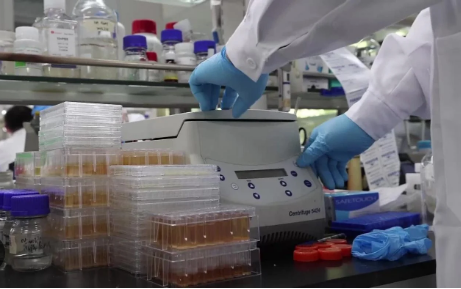

Chinese researchers have made a significant advancement in the realm of synthetic sugar production by successfully developing a novel artificial method to synthesize hexoses from carbon dioxide (CO2) within a laboratory setting. This scientific achievement is considered a crucial milestone in the global pursuit of synthetic sugar development.
The groundbreaking methodology was collaboratively devised by the Tianjin Institute of Industrial Biotechnology and the Dalian Institute of Chemical Physics, both affiliated with the esteemed Chinese Academy of Sciences. The findings were publicly disclosed on Wednesday through the Science Bulletin website and reported by the state news agency, Xinhua.
The research team highlighted the significance of constructing artificial “CO2-sugar” platforms, citing their potential in addressing the intricate challenges posed by land scarcity and the ramifications of climate change on the availability of dietary sugar.
In their published paper, the scientists detailed their innovative approach, which revolves around a versatile chemoenzymatic roadmap centered on aldol condensation, iso/epimerization, and dephosphorylation reactions. These mechanisms enable the asymmetric assembly of sugars using carbon dioxide and hydrogen (H2), achieving precise stereocontrol.
Remarkably, this chemical-biological platform demonstrated a superior carbon conversion yield compared to conventional “CO2-bioresource-sugar” processes. Moreover, the researchers underscored its scalability, asserting its potential to be extended for the precise synthesis of other complex sugars derived from CO2.
Notably, this breakthrough follows a previous accomplishment by the Tianjin Institute of Industrial Biotechnology, where they successfully devised a method for synthesizing starch from CO2 two years ago.