
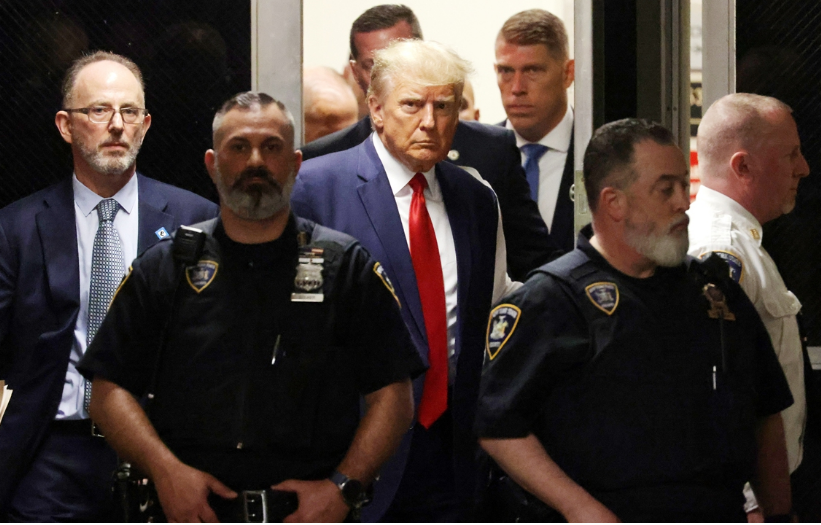

On Thursday, former US President Donald Trump entered a plea of not guilty to criminal charges connected to suspected attempts to overturn the 2020 US presidential election results. Trump referred to the case as “a persecution of a political opponent.” This marks the third criminal case related to the Capitol riots on January 6, 2021, and Trump is the first former president to face such charges.
Analysts have noted an unusual phenomenon where Trump’s involvement in legal cases seems to increase loyalty among his supporters. They attribute this to a growing loss of trust in the US political and legal systems, as laws are perceived to be instrumentalized for political purposes.
The charges against Trump include conspiracy to defraud the US, conspiracy to obstruct an official proceeding, obstruction, and conspiracy against the right to vote and have one’s vote counted.
In addition to this case, Trump faces state charges in New York related to an alleged hush-money payment and federal charges concerning classified government documents.
Experts highlight the possibility that Trump could run for president while facing convictions, as US laws do not restrict candidacy based on incarceration. This political climate raises concerns about the integrity of the US electoral democracy.
The arraignment of a former president and current Republican presidential frontrunner on such charges has been described as a remarkable and unprecedented moment in American history. The perceived politicization of laws and instrumentalization for political gains has generated public discontent and distrust in the US political and legal systems.
This perception is further exacerbated by the US’s actions in the international arena, which, when unrestrained, seem to backfire domestically, impacting public trust in the country’s governance.