
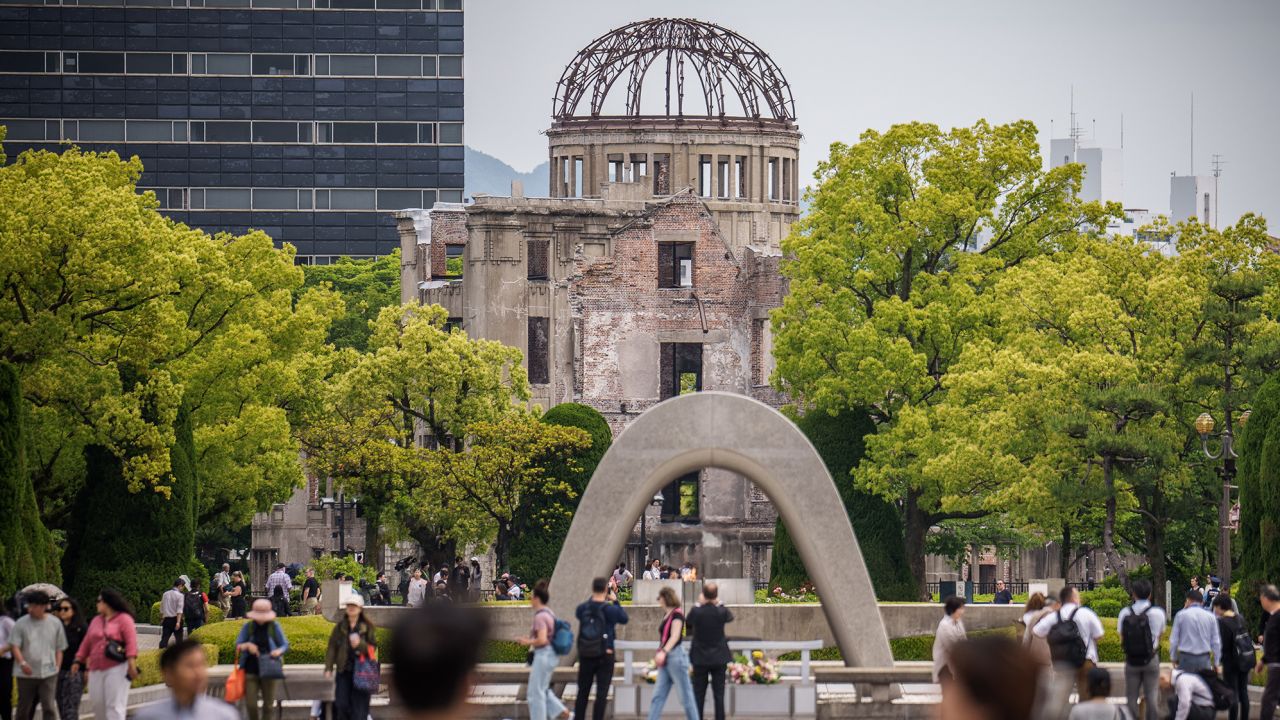

Hiroshima, Japan – As the leaders of the world’s seven most powerful democracies gather in Hiroshima today, the focus shifts towards addressing the growing influence of China and Russia on the global stage.
The annual Group of Seven (G7) summit, taking place in Hiroshima this year, aims to establish a unified response to China’s increasingly assertive actions, which are seen as a potential threat to global stability and economic security.
Furthermore, with Russia’s ongoing conflict in Ukraine heightening tensions, the summit provides an opportunity for G7 leaders to synchronize their strategies in dealing with both authoritarian powers.
While the situation in Ukraine will receive significant attention, including discussions on imposing further measures against Russia and deescalating nuclear concerns, the three-day summit will also serve as a platform for G7 leaders to reassess and coordinate their approach towards China.
The fact that China has refrained from condemning Russia’s invasion of Ukraine and has even strengthened ties with Moscow has raised concerns among G7 nations.
Yasuhiro Matsuda, an international relations professor at the University of Tokyo, explains, “Essentially, this meeting will revolve around discussions on how to effectively address China and Russia.”
However, finding a consensus on dealing with the world’s second-largest economy will prove challenging. China serves as a vital trading partner for the G7 countries, offering a significant consumer market and acting as a global manufacturing hub.
The G7 consists of the United States, Japan, Germany, the United Kingdom, France, Canada, and Italy, all of whom have economic ties with China.
The summit will require delicate navigation, striking a balance between safeguarding national interests and addressing shared concerns related to China’s assertiveness in various domains, including trade, technology, human rights, and geopolitical influence.
Leaders will likely engage in discussions aimed at formulating a cohesive strategy that protects their own economic interests while addressing the potential risks posed by China’s actions.
As the G7 summit commences, the world will be keenly observing the outcomes of the discussions on China and Russia, as they will have a significant impact on shaping global responses to these powerful authoritarian powers. The challenges lie ahead as leaders seek to forge a unified front while addressing the complexities of a rapidly changing geopolitical landscape.