

CNN — London/Berlin
Germany Blocks Volkswagen Subsidiary Sale to China on National Security Grounds
Germany has halted the sale of a Volkswagen subsidiary to China, citing national security concerns, further straining the relationship with its largest trading partner.
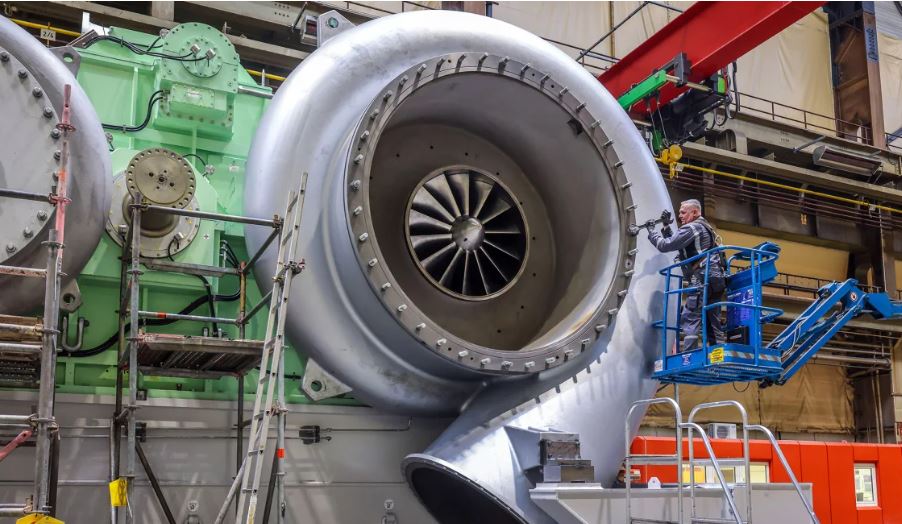
In June 2023, MAN Energy Solutions, a part of the Volkswagen Group, announced plans to sell its gas turbines business to Chinese state-owned CSIC Longjiang GH Gas Turbine Co (GHGT). However, a German government review initiated in September raised concerns that China might use the gas turbines to power warships, according to Reuters.
The decision to block the deal comes shortly after the European Union increased tariffs on electric vehicles from China, igniting a trade dispute. Beijing responded by launching an investigation into the prices of EU pork.
Germany’s economy minister, Robert Habeck, stated at a press conference on Wednesday that while Berlin welcomes foreign investments, technologies pertinent to “public security” must be safeguarded from countries “which maybe do not always have a friendly relationship with us.” Interior Minister Nancy Faeser echoed this sentiment, supporting the decision “for security reasons.”
In 2022, Germany and China traded goods worth €255 billion ($275.3 billion). However, Berlin’s relationship with Beijing has become strained as Germany seeks to protect local manufacturers and reduce its dependence on China. The German government, wary after its economic ties with Russia led to vulnerabilities following the invasion of Ukraine, is keen to avoid similar risks in the future.
Previously, in November 2022, Germany blocked the sale of a semiconductor factory to a Chinese-owned tech company, also citing security concerns.
A spokesperson for China’s Ministry of Foreign Affairs criticized the “politicization” of normal commercial cooperation, urging Germany to provide a fair business environment for all companies, including Chinese firms.
MAN Energy Solutions has stated it respects the government’s decision and will begin a structured process to shut down the gas turbine division in the coming months.
The additional EU tariffs, potentially increasing the cost of importing an electric car from China by up to 38%, will be effective from Friday for an initial period of four months. The EU will decide by November whether to extend these tariffs for five years.
The European Commission noted that consultations with the Chinese government have intensified recently to resolve the dispute. Volkswagen, Europe’s largest carmaker, reiterated that the timing of the EU’s decision is detrimental to the current weak demand for EVs in Germany and the region, stating that the negative effects outweigh any potential benefits for the European and German automotive industry.