
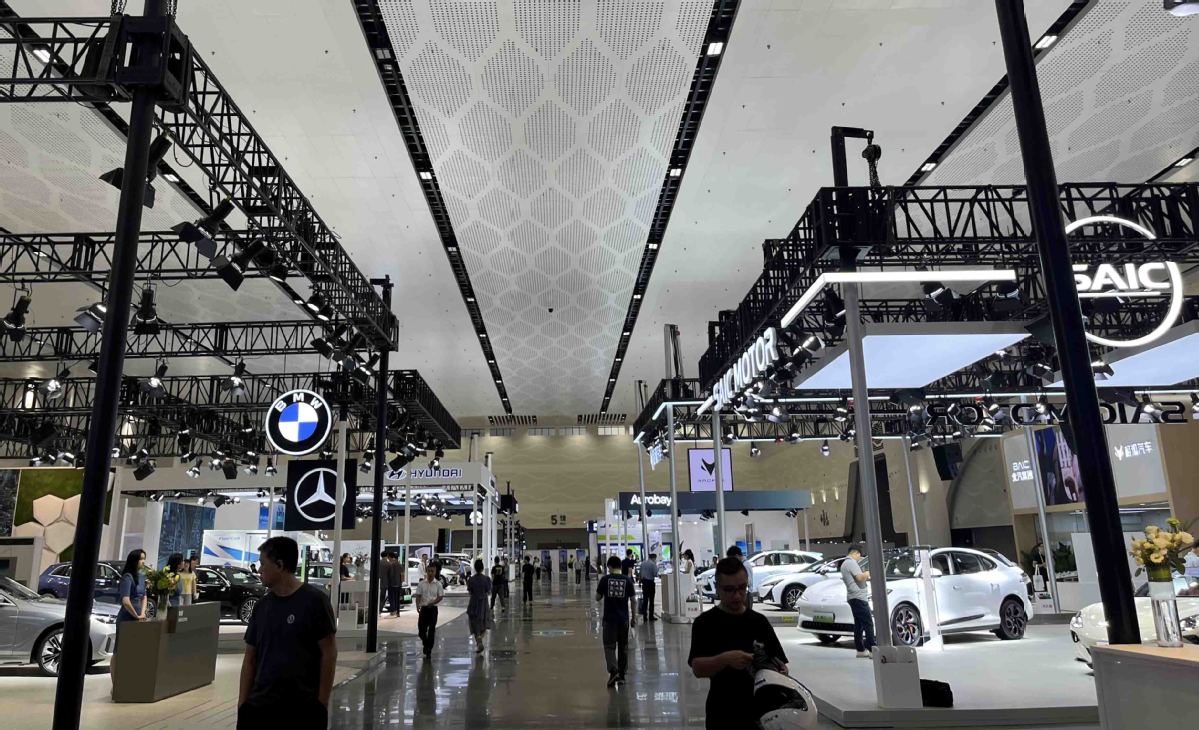

At the recent 2024 World New Energy Vehicle Congress in Haikou, Hainan, industry leaders emphasized the critical role of the new energy vehicle (NEV) sector in the global low-carbon transition. Experts highlighted that the automotive industry must achieve full electrification to secure over 50% market share for NEVs by 2035.
Wan Gang, president of the China Association for Science and Technology, underscored the importance of international collaboration to drive sustainable NEV development and carbon neutrality. He noted that significant efforts in innovation and policy coordination are essential to meet this ambitious target.
Xin Guobin, China’s vice-minister of industry and information technology, echoed this sentiment, stating that while the goal of a 50% NEV market share is challenging, China’s rapid growth in this sector is crucial for global electrification and climate action. From January to August 2024, global NEV sales exceeded 10 million units, accounting for 18% of total vehicle sales—a notable increase from the previous year.
In China, NEV sales reached over 7 million units in the same period, marking a 30.9% year-on-year increase and representing 37.5% of total car sales. The market has also seen a breakthrough, with new energy passenger vehicles surpassing a 50% market share in retail sales over the past three months.
Despite concerns about overcapacity, Wan pointed out that China’s vehicle ownership per capita remains low compared to developed nations, indicating significant growth potential. Additionally, nearly 100 million people have recently escaped poverty, driving demand for vehicle ownership.
Infrastructure development is also critical, with China boasting 2.72 million public charging stations and over 5.8 million private charging facilities by the end of 2023, establishing a strong foundation for NEV adoption.
International perspectives were shared by Mary Warlick, deputy executive director of the International Energy Agency, who praised China’s contributions to global carbon reduction. She called for open collaboration to address climate change.
Corporate leaders echoed the need for a fair global trade environment. Jochen Goller, CEO of BMW Group Region China, highlighted the importance of an open market for innovation, while Volkswagen Group CEO Oliver Blume recognized China as the epicenter of the automotive industry’s future.
However, concerns about trade protectionism were raised by Geely Auto CEO Gan Jiayue, who warned that rising tariffs and restrictive standards could impede the global adoption of Chinese NEVs and harm economic growth in Europe.
As the NEV industry continues to evolve, the focus remains on cooperation, innovation, and the shared goal of a sustainable automotive future.