

From the embers of trade wars to the unpredictable forces of nature and geopolitical struggles over resources, the world is grappling with a series of interconnected crises that are reshaping global dynamics.
1. Rolling Trade Wars: A New Era of Economic Isolationism
The world’s major economies are caught in a prolonged battle of tariffs and trade restrictions, with no clear resolution in sight. What began with the U.S.-China trade war has evolved into a wider global trade conflict, affecting not only industrial giants but also developing nations.
In recent months, countries from Europe to Southeast Asia have imposed retaliatory tariffs, and global supply chains are feeling the strain. “This isn’t just about the U.S. or China anymore,” said Dr. Sophia Tan, an economist at the International Trade Institute. “Countries are now choosing sides, and the fragmentation of global markets is inevitable.”
The U.S. continues to lead with aggressive trade policies, while Europe and China strengthen their own alliances. For smaller nations, including those in Africa and Latin America, navigating this new trade landscape has become a high-stakes game of balancing interests. “We are no longer just trading goods; we’re trading our geopolitical future,” says Tan.
2. Earthquake Devastates Myanmar: Relief Efforts Underway
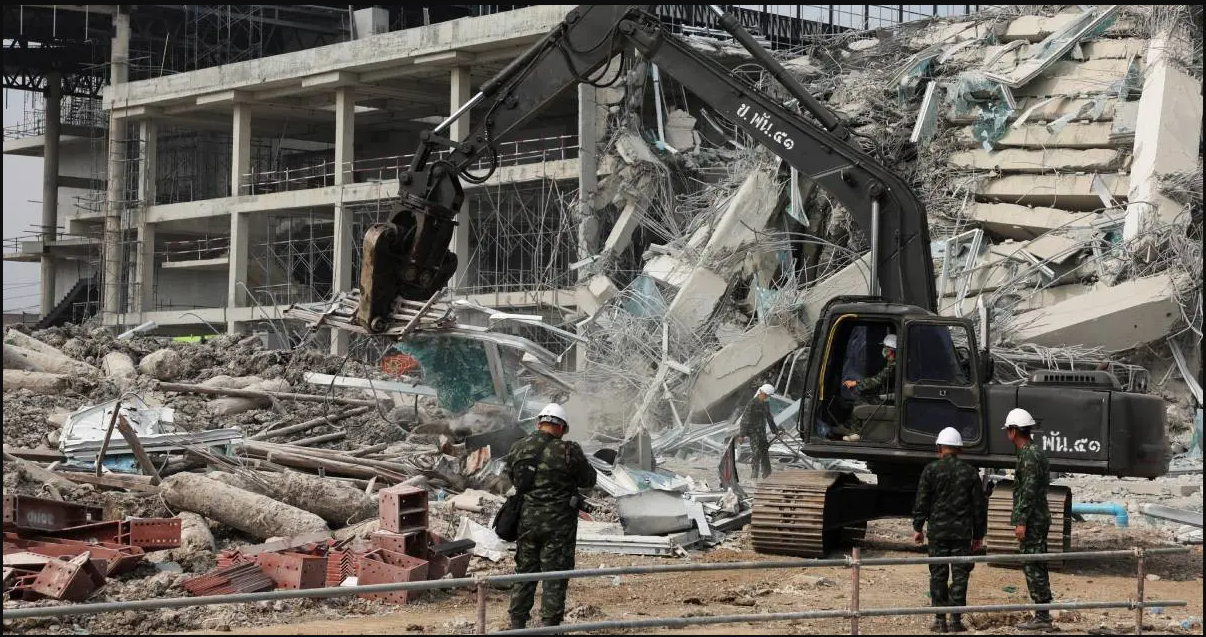
A massive earthquake struck Myanmar earlier today, causing widespread destruction and claiming at least 1,000 lives. The 7.8-magnitude quake, centered near the city of Mandalay, has left entire neighborhoods flattened and thousands of people displaced.
Local authorities and international aid organizations are working to provide food, water, and medical supplies to affected regions. The government has declared a state of emergency, and neighboring countries like Thailand and India have pledged emergency support.
“This is one of the worst natural disasters to hit Myanmar in decades,” said Lin Thant, a disaster response expert. “The challenge is not just the immediate rescue, but the long-term rebuilding of communities that were already vulnerable.”
With roads and bridges destroyed, access to many remote villages remains cut off, making rescue efforts even more difficult. Experts warn that aftershocks could continue for days, potentially complicating relief efforts further.
3. The Fight for Oil in the Amazon: Environmentalists Warn of Irreversible Damage
As oil exploration companies move deeper into the Amazon rainforest, environmentalists are sounding the alarm over the potential for irreversible damage. The region, home to some of the world’s most biodiverse ecosystems, is under increasing pressure as oil reserves become a major source of contention between governments, corporations, and Indigenous groups.
Brazil, which controls a significant portion of the Amazon, has recently approved new drilling licenses, spurring protests from environmental groups and Indigenous leaders who argue that extracting oil from the Amazon would exacerbate climate change and destroy vital ecosystems.
“The Amazon is not just a forest; it’s the lungs of the planet,” said Ana Costa, an environmental activist based in São Paulo. “Once you start drilling, there’s no going back.”
The global community has been divided over the issue, with some supporting the development of oil resources to boost Brazil’s economy, while others call for a halt to drilling in order to protect the rainforest. With the Amazon facing mounting pressures from deforestation and climate change, the oil battle is becoming the latest front in the larger war over the planet’s future.
4. The Politics of Time Zones: A Growing Global Debate
In a world increasingly driven by digital connectivity, the issue of time zones is sparking growing debate among nations, corporations, and even individuals. The global workforce is more interconnected than ever, and the logistics of time zones especially the discrepancies between East and West are proving to be a hindrance.
Proposals to simplify time zone structures or even abolish them altogether have gained traction in several countries. Some have argued that standardizing time zones globally would eliminate confusion for international businesses and enhance productivity.
“We live in a 24/7 world now, where global markets never sleep,” said Raj Patel, a political analyst. “The way time zones are structured, particularly with countries straddling multiple zones, no longer makes sense in a globalized economy.”
However, cultural and historical ties to local time systems remain strong, and resistance is significant. For now, the debate continues as governments weigh the potential economic benefits against the cultural importance of time zones..
source: gijn.org