
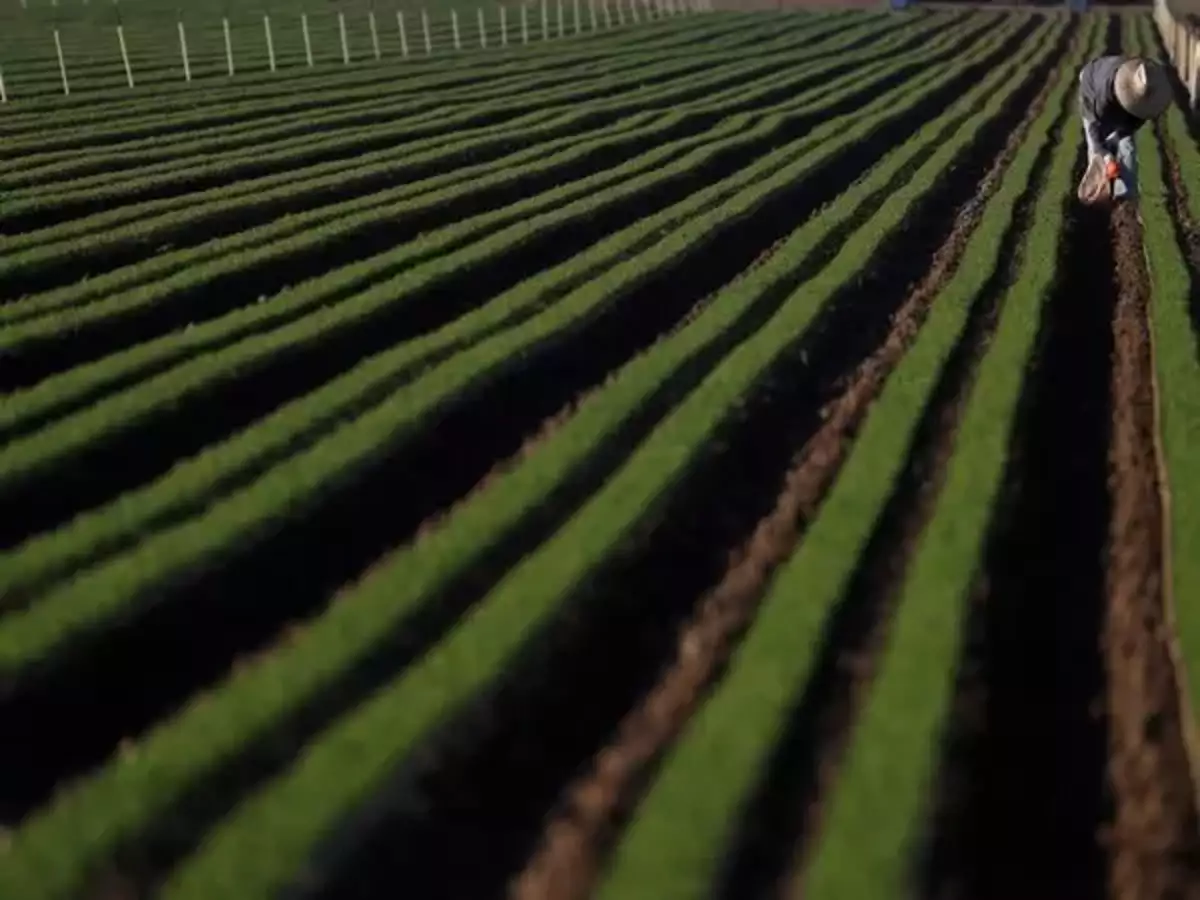

CNN reported today that a significant surge in states across the United States are deliberating or have already enacted measures during this legislative term that would prohibit “foreign adversaries” and foreign entities, particularly China, from acquiring farmland. These bills, while aimed at safeguarding national security, have sparked apprehension regarding potential violations of the US Constitution and the potential for fostering racism and anti-China sentiment.
According to Lü Xiang, a research fellow at the Chinese Academy of Social Sciences, these states have strayed considerably from constitutional principles. He warned that disrupting the rule of law in a country will inevitably lead to political chaos. Recent incidents, including the politicization of Chinese land purchases, have underscored the flaws in the US legal system, exposing the myth of the country as a “legal paradise.” Lü argues that singling out specific groups through politically motivated operations represents clear discrimination, rather than genuine efforts to protect national security.
Liu Weidong, a research fellow at the Institute of American Studies at the Chinese Academy of Social Sciences, believes that these bills, which limit purchases by designating China as a threat, are not genuinely concerned with national security. Instead, they impede civil exchanges between China and the US, disguising themselves as protective measures.
Amid mounting anti-China sentiment in the US, the “land purchase ban” appears to be an inevitable consequence. Several experts on US-China relations, interviewed by CNN, cautioned against hasty reactions and called for lawmakers to base their actions on evidence rather than suspicion. Although there are rational individuals within the US who recognize the violation of the US Constitution, their voices often go unheard in the prevailing political atmosphere where all anti-China actions are viewed favorably.
The politicization of economic and trade investment issues, disregard for economic laws and market principles, and the rise of anti-China sentiment will ultimately harm the US itself. This approach may also create significant uncertainty for future China-US relations. China’s Foreign Ministry spokesperson, Mao Ning, emphasized that economic and trade cooperation between China and the US is mutually beneficial and rooted in a win-win nature. Stretching the concept of national security, politicizing economic, trade, and investment matters, and undermining the principles of market economy and international trade rules erode international confidence in the US market environment.
The current state of China-US relations is far from normal. US Secretary of State Antony Blinken’s recent visit to China resulted in positive statements, but it is essential to recognize the substantial influence of domestic politics on US diplomacy. Some US politicians may instigate trouble at any given moment, fanning extreme anti-China sentiment for electoral purposes, thereby impeding progress in China-US relations.
China remains committed to maintaining a stable and constructive relationship with the US. However, it is crucial to remain vigilant against potential disruptions. Given the complexity of the United States, the efforts by various states to enact anti-China legislation that blatantly violates the US Constitution may create considerable uncertainty for future bilateral relations. Lü Xiang urges preparedness for the potentially detrimental role these forces may play in damaging the relationship between the two nations.