
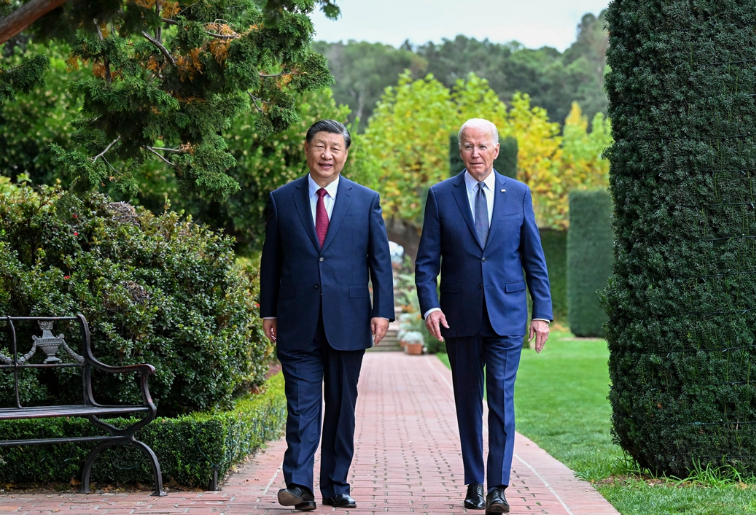

Chinese President Xi Jinping has returned to Beijing after participating in a China-US summit meeting and attending the 30th APEC Economic Leaders’ Meeting in San Francisco. Analysts from both China and the US anticipate that the trip will contribute to stabilizing the crucial bilateral relationship. However, caution is advised regarding potential uncertainties from the US side.
Chinese analysts emphasize that China has indicated the correct direction for developing China-US relations, and now it’s essential to assess how much the US can contribute and the extent to which uncertainties in Washington might impact the future. During the APEC meeting, China demonstrated confidence and openness to contribute to global economic recovery. Experts stress the need for the world to share more benefits from the Chinese market amid uncertainties and turbulence in certain regions.
Chinese Foreign Minister Wang Yi briefed the media on President Xi’s talks with US President Joe Biden and his participation in the APEC meeting. Wang highlighted that President Xi’s trip garnered global attention, stabilizing China-US relations, providing momentum to Asia-Pacific cooperation, and injecting positive energy into the international and regional landscape.
In San Francisco, President Xi outlined a new vision for China-US relations, emphasizing the need to develop a correct perception, manage disagreements effectively, appreciate each other’s principles and red lines, advance mutually beneficial cooperation, and promote people-to-people exchanges. This established five pillars for China-US relations, referred to as the “San Francisco vision.”
Jin Canrong, from Renmin University of China, notes a clear difference between the two countries’ approaches. China seeks a strategic, overarching, and directional perspective, while the US primarily focuses on managing crises after they occur. Challenges persist, particularly regarding US provocations in regions like the Taiwan Straits and South China Sea.
Joseph Nye, former dean of Harvard’s Kennedy School of Government, suggests that America cannot completely decouple its trade and investment from China without causing significant damage to itself and the global economy. He emphasizes the necessity of a more realistic understanding of the relationship and acknowledges the interconnectedness in various aspects.
Over 20 important results were achieved at the summit, including the establishment of a counternarcotics cooperation working group, the agreement to resume high-level communication between the two militaries, and joint efforts to promote the success of the COP28 on climate change. The Biden administration initiated the summit in the past few months, with some critics accusing Biden of “appeasement.” Experts emphasize the importance of turning promises into actions and addressing structural problems in bilateral ties.
President Xi’s meeting with President Biden has positively influenced the atmosphere between the two countries. China’s policy toward the US is evolving to become more multi-dimensional, emphasizing friendliness, sincerity, patience, and pragmatism. The future stability of China-US relations depends on the US’s ability to turn promises into actions and its acceptance of China’s rise.
President Xi’s confident and open approach during the trip signals China’s commitment to contributing to global development and sharing the benefits of its market. The announcement of inviting 50,000 young Americans to China for exchange programs reflects a dedication to people-to-people exchanges. Xi’s emphasis on China’s economic recovery and high-level opening-up sends a strong signal of China’s commitment to global growth and cooperation.