

Beijing, China — The Middle East has become a crucial market for Chinese new energy companies expanding internationally, offering substantial development opportunities despite growing global trade challenges. Industry experts highlight the region’s abundant wind and solar resources, along with a wealthy consumer base, as key advantages for Chinese firms seeking to establish a foothold abroad.
Li Jing, a partner at KPMG China, noted that the Middle East provides a favorable environment due to its strong purchasing power, ensuring stable revenues for companies. Renewable energy projects, characterized by shorter cycles and clearer profit models compared to traditional infrastructure initiatives, allow Chinese firms to leverage their technological expertise and rapidly capitalize on market opportunities.
Vast Renewable Potential
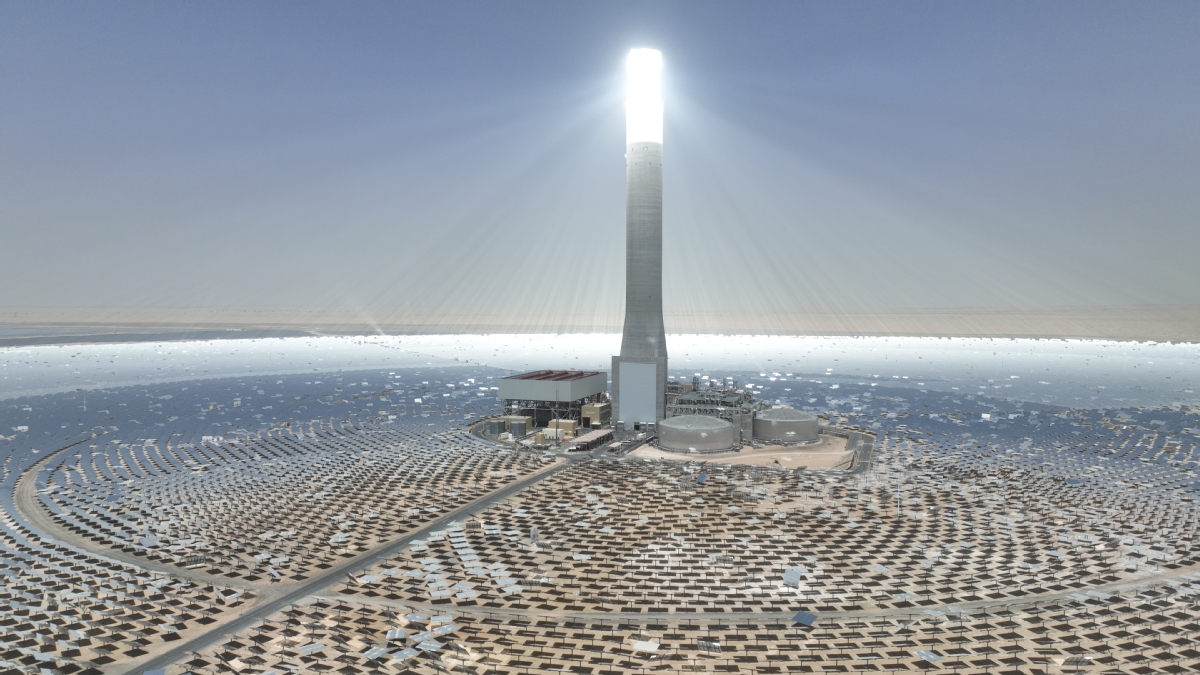
A recent KPMG report reveals that the Middle East receives 22-26% of the world’s total solar energy, with solar potential equivalent to the output of 1 to 2 million barrels of oil annually per square kilometer. This capacity could satisfy at least 50% of global power demand. Additionally, three-quarters of the region has wind speeds suitable for utility-scale wind farms, with Morocco, Egypt, and Tunisia leading in wind energy potential.
Strengthening Bilateral Relations
On a broader scale, China and Arab states have been enhancing bilateral investment cooperation, with China signing agreements with 22 Arab nations and the Arab League under the Belt and Road Initiative. Recent visits by Chinese Premier Li Qiang to Saudi Arabia and the UAE included a delegation of executives from top renewable energy firms, such as Xinjiang Goldwind, Trina Solar, and GCL Group.
Strategic Shift Amid Global Tariffs
Chinese manufacturers are reevaluating their overseas strategies in response to rising tariffs from the U.S. and EU, aimed at limiting China’s influence in the solar supply chain. Cai Zhongquan, managing partner for energy and natural resources at KPMG, emphasized that international markets are becoming vital for Chinese new energy companies, particularly in solar, wind, storage, and hydrogen energy sectors. The Middle East is increasingly viewed as a safe haven for expansion.
KPMG reports a nearly 30% year-on-year increase in exports of electric vehicles, lithium-ion batteries, and solar cells from China. Notable joint ventures have emerged, such as those between Jinko Solar and TCL Zhonghuan with Saudi Arabia’s Public Investment Fund, involving investments exceeding $3 billion. GCL Technology and Trina Solar have also announced plans for projects in the region.
As Chinese new energy companies navigate evolving global dynamics, the Middle East stands out as a strategic market for growth and collaboration in renewable energy initiatives.