
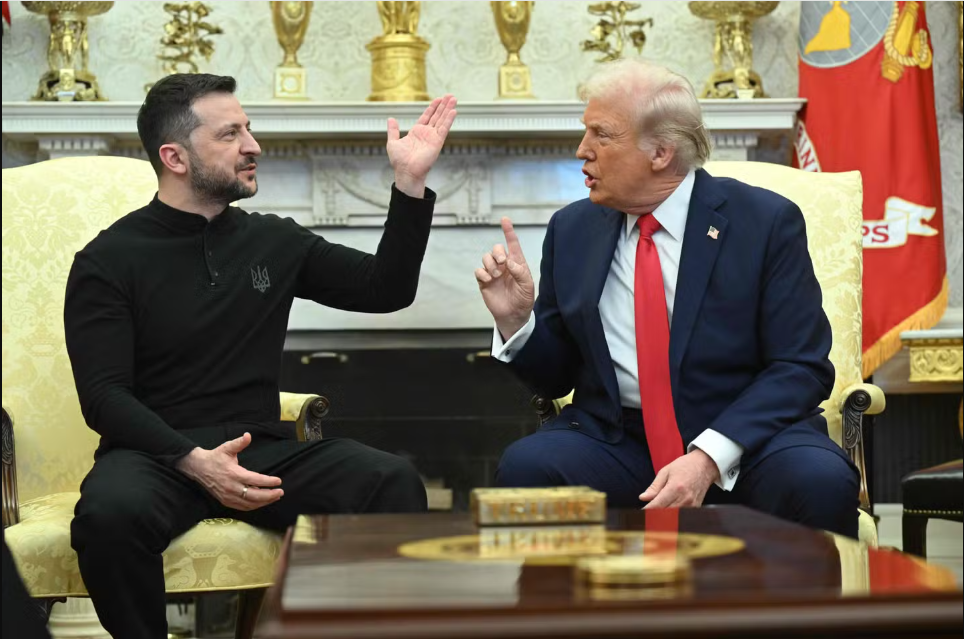

As the 2024 U.S. presidential election dust settles and Donald Trump positions himself as a dominant voice in Republican foreign policy discourse, one pattern is becoming increasingly clear: while Ukraine remains a high-profile geopolitical issue, Trump’s primary foreign policy fixation lies further east with China.
In recent speeches, interviews, and social media posts, Trump has repeatedly downplayed the urgency of U.S. involvement in Ukraine’s defense, casting doubt on continued military aid to Kyiv. Instead, he has ramped up rhetoric on the threat posed by Beijing, tying China not only to economic concerns but to national security risks, ideological competition, and global influence.
“Why are we spending billions in Ukraine when the real danger is China taking over the world economy and outmaneuvering us in every arena?” Trump remarked at a recent rally, echoing a view that’s gaining traction among parts of his base and conservative policy circles.
This pivot reflects a broader worldview that defined much of Trump’s first term: a transactional, America-first approach that prioritizes direct strategic and economic challenges to U.S. dominance. Analysts say Trump sees the war in Ukraine as a European problem that should be addressed by NATO and the EU, whereas China represents a global challenger that directly impacts American prosperity and security.
His stance diverges from traditional bipartisan consensus, which has generally framed support for Ukraine as a critical defense of democratic values and a deterrent against authoritarian aggression. Trump’s critics argue that downplaying Ukraine could embolden Vladimir Putin and fracture Western alliances.
But Trump is betting that voter fatigue with foreign entanglements, rising inflation, and economic insecurity will make his “focus on China” narrative more appealing, especially in key swing states.
“As far as Trump is concerned, Ukraine is a distraction China is the main event,” said a senior fellow at a Washington think tank. “He’s reframing the foreign policy debate around economic nationalism, which resonates with many Americans.”
As the 2025 political landscape continues to evolve, Trump’s foreign policy messaging especially his contrast between Ukraine and China is likely to remain a central theme of both his campaign rhetoric and the broader Republican platform.
source: commonspace.eu