
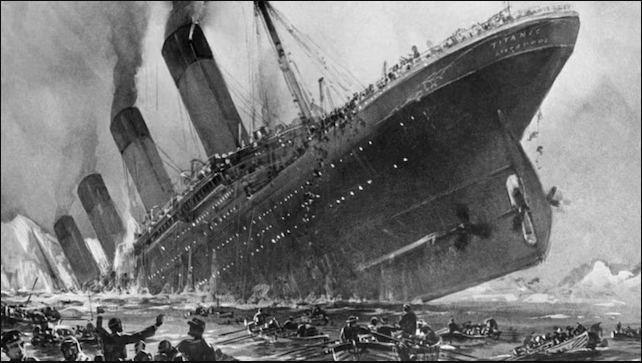

The RMS Titanic, long regarded as one of the most famous shipwrecks in history, has once again captured the world’s attention with the release of new, groundbreaking scans revealing critical details about its final hours. In an unprecedented examination of the wreck, researchers have gained a clearer understanding of the ship’s structural damage and the sequence of events that led to its sinking. This new scan, a result of advanced sonar technology and underwater drone exploration, promises to answer lingering questions about the ship’s fateful descent into the Atlantic in 1912.
The high-resolution scan, conducted by an international team of marine archaeologists and engineers, offers unprecedented clarity in mapping the Titanic’s position and state of disrepair. The team’s cutting-edge tools have revealed hidden details about the wreckage, particularly the stern section of the ship, which had been obscured in previous scans due to poor resolution. These new findings add another layer of insight into the final moments of the doomed vessel, as well as the aftermath of the ship’s tragic collision with the iceberg.
Among the revelations, the scan provided clearer images of the Titanic’s debris field, stretching over a significant expanse on the ocean floor. This discovery could give researchers fresh clues about the sequence of events following the iceberg strike, particularly how the ship may have broken apart during its final plunge. For over a century, the mechanics of the Titanic’s sinking have been the subject of much debate, with conflicting theories about how the ship fractured and sank.
The most significant of these findings may lie in the analysis of the ship’s hull and stern. For decades, experts have speculated about the condition of the Titanic’s lower decks and whether flooding occurred gradually or more catastrophically. The new data could clarify whether certain parts of the ship gave way first or if the ship’s final break was more violent than previously imagined. Researchers hope the scan will offer vital clues on whether the ship sank in a single, catastrophic event or whether a more gradual disintegration took place.
These advancements come nearly 111 years after the Titanic’s ill-fated maiden voyage, which claimed the lives of over 1,500 passengers and crew members. Despite countless investigations, expeditions, and retellings of the disaster, the specifics of the ship’s final hours have remained elusive. The Titanic’s tragic end has fascinated the public and scholars alike, inspiring numerous books, films, and documentaries, all seeking to understand what went wrong on the night of April 14, 1912.
This latest exploration of the wreck is not just about uncovering the past—it also serves a vital purpose in the present. By shedding new light on how the Titanic met its end, the scan could lead to critical advancements in the field of maritime safety. In particular, modern engineers could use the findings to better understand ship design flaws, construction practices, and how these lessons can improve the safety of modern vessels. The tragedy of the Titanic, after all, set the stage for significant reforms in maritime law, particularly regarding lifeboat requirements and ice patrols in the North Atlantic.
As the team continues to analyze the newly collected data, the scan’s impact is expected to reach beyond academic circles. The results may influence future explorations of the wreck, spurring renewed interest in understanding the Titanic’s legacy. These findings, though deeply rooted in the past, offer crucial insights into how historical lessons can shape modern practices.
Moreover, the emotional weight of the Titanic disaster continues to resonate. As researchers delve deeper into the ship’s wreckage, they are reminded of the more than 1,500 lives lost in a maritime tragedy that continues to echo through history. This new scan not only offers valuable information for scientific and historical purposes but also stands as a poignant tribute to those who perished on that cold, starry night over a century ago.
In conclusion, the latest Titanic scan represents a significant leap in maritime archaeology. By providing clearer visuals of the wreckage and uncovering hidden details of the ship’s final moments, this research is poised to answer long-standing questions about the disaster while also informing safety protocols for the future. As we uncover more about this iconic ship’s last hours, we continue to learn, reflect, and strive toward safer voyages for generations to come.
source: bbc.com