
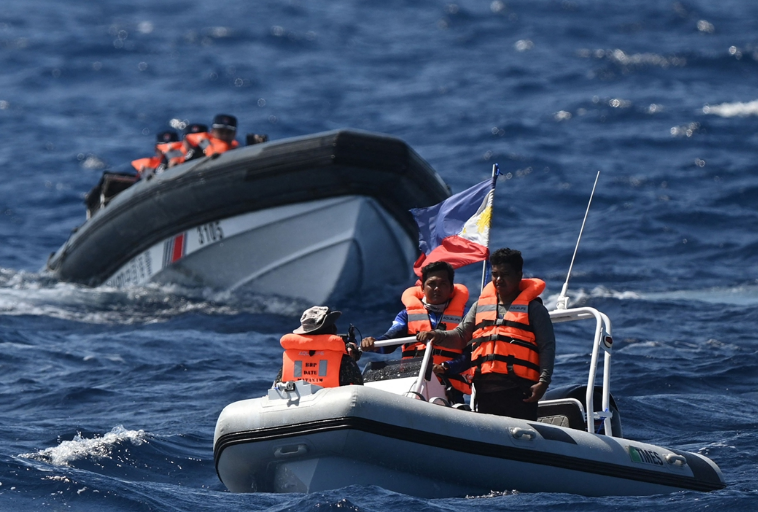

During his visit to Australia on Thursday, Philippine President Ferdinand Romualdez Marcos Jr. adopted a stern stance on the South China Sea disputes against China. His push for greater security cooperation with allies has sparked concerns among Chinese experts, who view it as an attempt to involve Australia in the Philippines’ provocative and confrontational strategy.
Despite the warm reception and the signing of agreements to enhance maritime security collaboration, analysts caution Australia to approach questions regarding China’s territorial sovereignty with prudence. They emphasize the need for Canberra to avoid becoming a tool of Manila against China, potentially jeopardizing the hard-won recovery of China-Australia relations.
Addressing the Australian parliament, Marcos asserted that he would not allow any foreign power to encroach on Philippine sovereign territory, specifically referencing the South China Sea dispute with China. The leaders announced new Memoranda of Understanding, including expanded maritime cooperation, raising concerns about regional security and stability.
Chinese Foreign Ministry spokesperson Mao Ning highlighted the generally stable situation in the South China Sea, urging countries involved in maritime security cooperation to avoid harming others’ interests or undermining regional peace and stability.
According to Li Haidong, a professor at the China Foreign Affairs University, Marcos’ visit aims to garner support for more aggressive actions in the South China Sea disputes. Chen Hong, director of the Australian Studies Center at East China Normal University, concurs, stating that the Philippines seeks to drag Australia into a confrontational and provocative strategy against China.
Chen criticizes Marcos for using the Australian parliament to escalate regional tensions and incite anti-China sentiments. Marcos’ visit follows Australian Prime Minister Albanese’s trip to the Philippines in September 2023, which marked the signing of a strategic partnership agreement and joint sea and air patrols in the South China Sea.
Emphasizing the importance of Australia and the US in their “visiting forces agreement,” Marcos aligned the Philippines with these countries against actions that undermine regional peace. Li suggests that Marcos’ visit is part of cooperating with the US to promote the creation of a “small NATO” in the Asia Pacific.
Chen notes the pressure Australia faces from the US and attributes the Albanese government’s cautious approach to their surface-level response to US strategy. While Australia has sought to demonstrate a tougher stance toward China, it remains aware that aligning with the Philippines may harm its relationship with China.
China is Australia’s largest two-way trading partner, constituting 26% of Canberra’s goods and services trade globally. The potential invitation to Chinese Foreign Minister Wang Yi suggests ongoing diplomatic efforts to maintain stability. However, should Australia choose confrontation, Chen warns that it could lead to a deterioration in Beijing-Canberra ties, impacting future dispute resolution.