
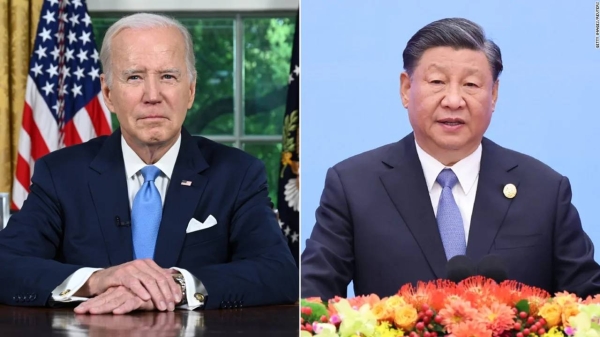

Addressing Trade, Taiwan, and Bilateral Relations. This marks their first meeting in a year, set against a backdrop of tensions and concerns. The leaders plan to engage in discussions during the Asia-Pacific Economic Cooperation (APEC) summit in San Francisco, aiming to maintain open communication and manage competition responsibly.
While no major announcements are anticipated, the meeting will cover various topics, including transnational challenges and geopolitical issues such as the Israel-Hamas conflict, Russia’s invasion of Ukraine, and the upcoming presidential election in Taiwan. The summit comes amidst heightened tensions between the U.S. and China over economic, technological, and regional security matters.”
US Treasury Secretary Janet Yellen and Chinese Vice Premier He Lifeng met earlier in San Francisco, part of ongoing efforts to ease tensions between the two nations. The discussions, which have been ongoing for several months, aim to enhance communication on mutual interests and address economic and financial matters. The establishment of new economic and financial working groups in September was considered a positive step forward in the bilateral relationship.
However, underlying tensions persist, with incidents over the past year, such as the suspected Chinese spy balloon and the visit of Taiwan President Tsai Ing-wen to the US, contributing to the strained relationship. Differences on issues like Taiwan, where China claims sovereignty, remain a significant point of contention. As Taiwan prepares for elections in January, Beijing’s historical attempts to influence outcomes and its military exercises in the Taiwan Strait add complexity to the situation.
The leaders are also expected to discuss global challenges, including the Israel-Hamas conflict and Russia’s actions in Ukraine. China’s declared neutrality in the Ukraine war has drawn scrutiny, with accusations of economic support to Russia amid Western sanctions. Trade and technology disputes between the US and China add further complexity to the relationship, with the US introducing export controls targeting China’s microchip industry last year.
President Biden is likely to urge President Xi on leveraging China’s influence over North Korea, particularly concerning North Korea’s recent ballistic missile tests and its alleged provision of munitions to Russia for the conflict in Ukraine. As the leaders navigate these multifaceted issues, the outcome of their meeting will be closely watched for signals on the trajectory of US-China relations and their collaborative approach to global challenges.