
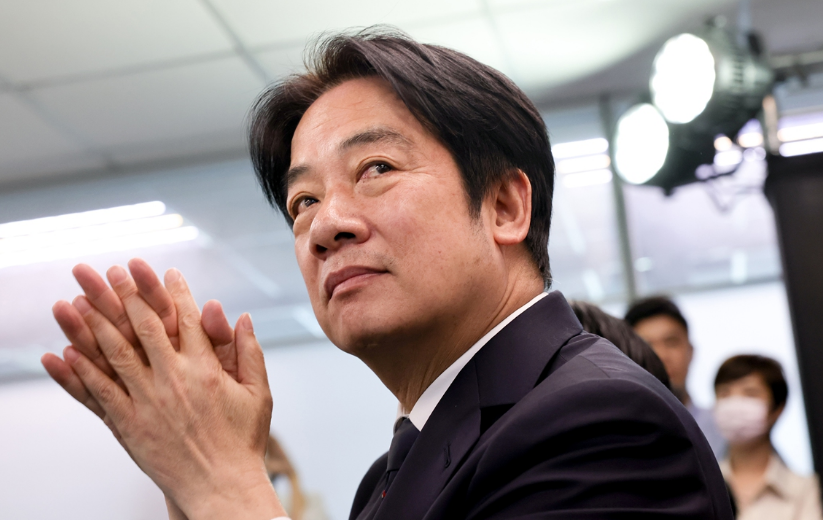

Ahead of a planned “stopover” by Taiwan’s deputy leader Lai Ching-te in the US, more than 600 individuals from 60 political parties and civil organizations gathered at Taipei’s Ketagalan Boulevard to voice their opposition. The protestors expressed concerns about Lai’s secessionist rhetoric, fearing it could escalate tensions in the Taiwan Straits. The demonstrators urged the Democratic Progressive Party (DPP) leadership to acknowledge the 1992 Consensus and prioritize peaceful development with mainland China.
Lai, who is also a contender in the upcoming 2024 regional election, is scheduled to make “stopovers” in New York and San Francisco from August 12 to 18 during his trip to Paraguay.
A joint statement issued after the rally condemned Lai’s “reliance on the US to seek independence,” asserting that such actions have harmed the interests of the Taiwanese people, eroded trust between both sides of the Taiwan Straits, and disrupted the peaceful progress of cross-Straits relations. The statement further criticized Lai for disregarding the “1992 Consensus,” which has historically maintained peaceful exchanges between the two sides, and accused him of collaborating with the US to escalate tensions in the region.
The statement cautioned that pursuing Taiwan’s secession could lead to catastrophic warfare, emphasizing that peaceful reunification remains the most beneficial path for both sides. It called on Lai and the DPP authorities to heed the people’s calls for peace, refrain from relying on the US to promote secession, and avoid becoming pawns in potential conflicts.
Additionally, overseas councils promoting peaceful reunification of China also expressed strong opposition to Lai’s planned “stopovers.”
Against the backdrop of Lai’s impending visit, an online poll by Taiwan-based media indicated that over 65 percent of respondents are concerned about potential cross-Straits military conflict.
Zhang Wensheng, deputy dean of the Taiwan Research Institute at Xiamen University, remarked that Lai’s provocative actions may heighten concerns among Taiwan’s populace. He noted that while Lai’s approach may be intended to appeal to voters, it contradicts the majority’s desire for peaceful interactions between both sides of the Taiwan Straits.
Experts draw parallels between Lai’s actions and the US’ inconsistent stance in global conflicts, pointing out recent examples such as the withdrawal from Afghanistan and the Ukraine crisis. They suggest that Taiwanese citizens are becoming increasingly aware that the US may not necessarily intervene in conflicts, even potentially sacrificing Taiwan’s security.
John Kirby, White House national security spokesperson, asserted that there has been no change in the US’ one-China policy and advised against escalating tensions. However, critics argue that such rhetoric contradicts the US’ actions, particularly considering Lai’s reception and support during his US visit.
Zhang emphasized that extending support to Taiwan secessionist figures is tantamount to endorsing independence activities, a stance that goes against the US’ promised one-China policy and infringes on China’s sovereignty.
Recent reports from Taiwan’s defense authority highlighted the presence of People’s Liberation Army (PLA) aircraft and Navy vessels around Taiwan. These developments have led to heightened concerns about regional stability and security.