
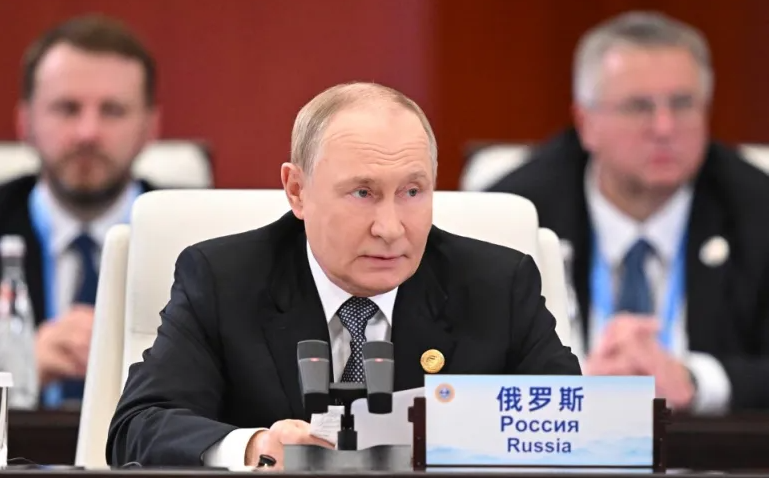

Russian President Vladimir Putin has once again blamed Western nations for the ongoing war in Ukraine, telling leaders at the China-led Shanghai Cooperation Organisation (SCO) summit that the conflict was the result of “aggressive policies” by the United States and its allies.
Speaking to fellow member states, Putin claimed that NATO expansion and Western interference in Eastern Europe had forced Russia to act in defence of its security interests. “What is happening in Ukraine is not a choice made by Russia, but the inevitable outcome of years of Western provocation,” he said.
The SCO gathering, hosted in Kazakhstan, brought together leaders from China, India, Pakistan, Central Asia, and other observer nations. It offered Moscow an opportunity to demonstrate it is not internationally isolated despite sweeping sanctions and diplomatic pressure from the West.
China’s President Xi Jinping refrained from directly addressing the Ukraine war in his speech, but echoed calls for a “multipolar world order” free from what he described as Western dominance. Several other leaders focused on trade, regional security, and counter-terrorism rather than the conflict.
Western governments have consistently rejected Moscow’s narrative, accusing Russia of waging an unprovoked invasion that has caused tens of thousands of deaths and displaced millions. The US and European Union have pledged continued support for Kyiv, including military and financial aid, while pressing Russia to withdraw.
Analysts say Putin’s remarks were aimed at strengthening Russia’s standing among SCO members, some of which maintain close economic ties with Moscow despite pressure from Washington and Brussels. “By using this forum, Putin is trying to show he has allies, or at least partners willing to engage with him,” said Professor Elena Markov, a political analyst based in London.
The SCO summit highlighted the bloc’s increasing relevance as a counterweight to Western-led institutions. However, it also exposed divisions, with some members cautious about being drawn into Moscow’s confrontation with the West.
For Russia, the platform offered another stage to push its message: that the war in Ukraine is not just about Kyiv, but part of a broader struggle against Western hegemony.