
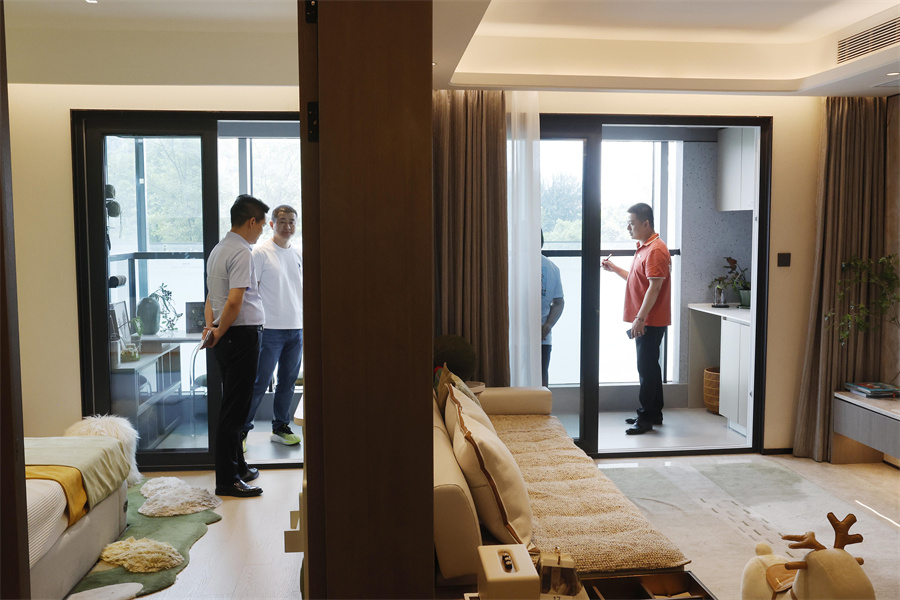

Backed by combined policy support from central and local governments, Shanghai’s real estate market is beginning to show recovery signs, with industry experts predicting a comprehensive restoration in the coming months.
Yao Yao, head of research for JLL China, noted several positive changes in the third quarter. Demand for office leasing is increasing, driven by cost-effective requirements, while retail leasing is recovering in sectors such as affordable dining, sportswear, streetwear, local designer brands, and collectible toy stores. The residential property sector is supported by stable demand due to homeowners seeking upgrades.
These improvements can be attributed to a range of supportive measures announced by the Chinese government, which benefit sectors including finance, consumption, investment, and employment. “The supportive measures will work together to greatly boost market confidence,” Yao stated.
James Macdonald, head of Savills Research China, emphasized that although many asset classes face short-term challenges, there are opportunities across all real estate segments depending on entry price, location, and market niche. He highlighted that the Shanghai residential sales market shows strong prospects due to household equity, recent policy measures, and pent-up demand.
Shaun Brodie, head of research content for Cushman & Wakefield, remarked on the attractiveness of shopping centers, which offer stable rental yields and appreciation potential, making them a new favorite among investors.
Lu Yan, head of research for CBRE Eastern China, projected a moderate recovery in office and business park leasing demand in the fourth quarter, with outdoor sports and food & beverage sectors driving retail property demand. He noted that while the office sector faces short-term challenges, government policies are expected to stimulate economic recovery and positively impact the market, albeit with delayed effects.
To boost consumer sentiment and enhance consumption, Shanghai has intensified promotional policies, including the issuance of consumption vouchers for key sectors like dining and entertainment. This is expected to foster growth in the consumer market.
In logistics, the government has implemented various policies to stimulate consumption, such as subsidies for green and smart home appliances, and allocated significant funds to support the dining and accommodation sectors. These measures are anticipated to enhance market recovery and drive demand for warehousing space.
Yao highlighted that the Shanghai municipal government’s efforts to encourage consumption will positively influence the retail property sector and expand home demand, thereby boosting market confidence.
Both local and central governments are rolling out measures consistent with the Political Bureau of the Communist Party of China Central Committee’s directive from September 26, which called for stabilizing the market.
Brodie expressed confidence that the latest directives will stabilize market expectations, optimize the supply structure, improve the financing environment, and promote a new model for real estate development.