
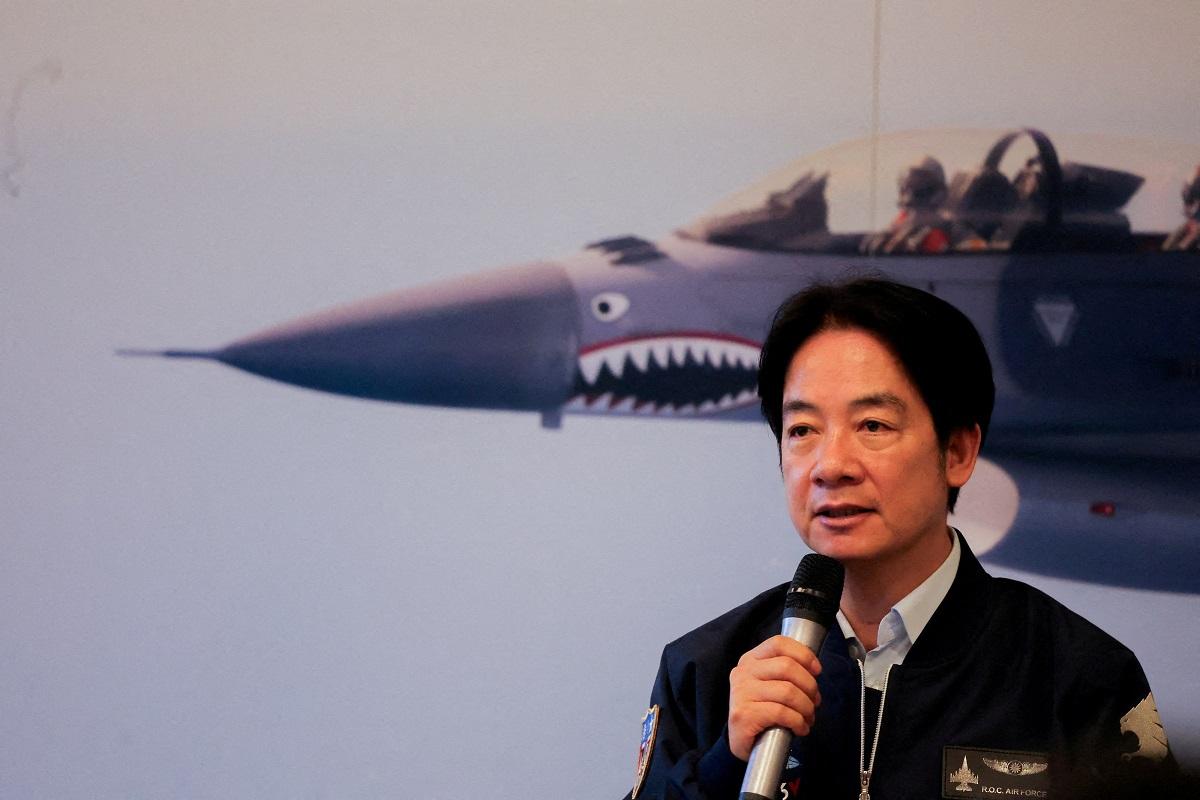

In a bold reaffirmation of Taiwan’s de facto independence, President Lai Ching-te declared that the island is “of course” a country, directly rebutting Beijing’s long-standing claim over the self-governed democracy. His remarks mark one of the strongest rhetorical assertions of sovereignty since taking office and underscore Taiwan’s determination to chart its own path amid rising regional tensions.
Speaking at a televised press conference in the presidential office, Lai framed the statement not as provocation but as a matter of fact, rooted in Taiwan’s robust democracy and international engagement. “We elect our own leaders, run our own government, uphold the rule of law, and maintain vibrant global relationships. By every definition, Taiwan is a sovereign, independent country,” he said.
Lai’s comments arrive against the backdrop of a steady escalation in Chinese military maneuvers around Taiwan. In recent weeks, the People’s Liberation Army (PLA) has ramped up air and naval patrols in the Taiwan Strait, part of what analysts say is a campaign to intimidate Taipei and dissuade further moves toward formal independence.
Beijing responded swiftly to Lai’s remarks. The Chinese Ministry of Foreign Affairs issued a statement denouncing what it called “separatist rhetoric” and warning of “strong countermeasures” should Taiwan move to alter the status quo. “There is only one China in the world, and Taiwan is an inseparable part of it,” the statement read, accusing Lai’s administration of “inciting confrontation.”
The dispute over Taiwan’s status has long been a flashpoint in U.S.-China relations. While Washington adheres to the “One China” policy, it remains Taiwan’s key security partner and has increasingly voiced support for Taipei in the face of coercion. The Biden administration has not formally commented on Lai’s statement, but a senior U.S. official, speaking anonymously, said the U.S. continues to oppose unilateral changes to the status quo by either side.
Since his inauguration in May, President Lai has walked a fine line balancing a firm stance on Taiwan’s identity with efforts to avoid direct conflict with China. Unlike his predecessor Tsai Ing-wen, whose tenure saw a shift away from overt assertions of independence, Lai has more openly embraced Taiwan’s distinct nationhood. His Democratic Progressive Party (DPP), which champions Taiwan’s self-rule, retained power in January’s elections despite intense pressure from Beijing.
Public sentiment in Taiwan has also shifted in recent years. Polls consistently show that a majority of Taiwanese favor maintaining the current situation of de facto independence, with a growing number supporting eventual formal independence if it can be achieved peacefully. Few support unification with China, especially as Beijing tightens political control at home and maintains its threats of force.
Regional analysts warn that Lai’s comments could increase the risk of miscalculation. “This is a significant moment,” said Bonnie Glaser, a Taiwan expert at the German Marshall Fund. “President Lai is signaling a new assertiveness, and how Beijing chooses to respond could shape the trajectory of cross-strait relations for years to come.”
source: reuters.com