
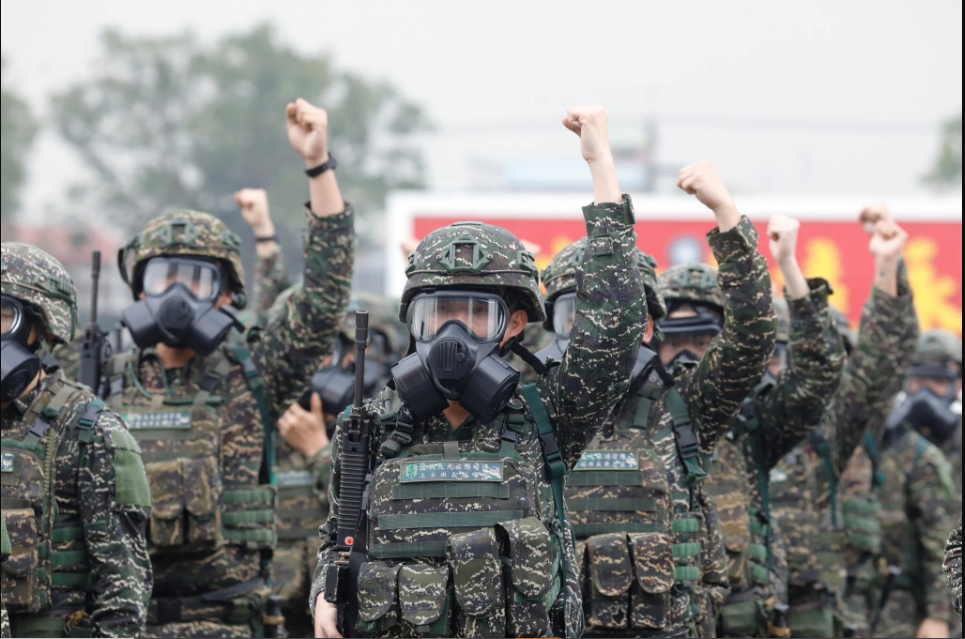

U.S. Special Operations Forces will play a pivotal role in securing American victory in any future high-intensity conflict, a senior Pentagon official said on Wednesday, underscoring the evolving nature of modern warfare and the increasing reliance on elite units for strategic advantage.
Speaking at a defense symposium in Arlington, Assistant Secretary of Defense for Special Operations and Low-Intensity Conflict, Christopher Maier, emphasized that in a potential large-scale confrontation particularly with near-peer adversaries such as China or Russia special forces will not merely support conventional forces, but will be at the forefront of operations.
“In a high-end fight, our special operations forces will be essential not optional,” Maier stated. “Their ability to operate in contested environments, deliver precision effects, and integrate seamlessly with cyber and space capabilities makes them a decisive force multiplier.”
The remarks reflect a broader shift in Pentagon strategy, which is increasingly focused on hybrid and multi-domain warfare, where conventional battlefield dominance alone is no longer sufficient. Special forces — traditionally associated with counterterrorism and covert missions are now being reoriented to conduct operations in environments shaped by advanced surveillance, electronic warfare, and disinformation.
Maier highlighted the role of special operators in gray-zone scenarios conflicts that fall below the threshold of open warfare as well as their importance in early-phase deterrence, deep reconnaissance, and enabling allied forces.
As geopolitical tensions escalate, especially in the Indo-Pacific and Eastern Europe, the U.S. military is undergoing a transformation to adapt to emerging threats. This includes strengthening partnerships, enhancing special operations training for high-intensity missions, and integrating cutting-edge technologies like AI and autonomous systems.
“Our adversaries are adapting rapidly. We must ensure our forces remain faster, smarter, and more agile,” Maier said.
The U.S. has already conducted several joint exercises in recent months that showcase the expanded role of special forces in potential peer-to-peer conflicts, including simulated operations in cyber-denied zones and coordination with NATO allies under electronic warfare conditions.
Analysts say the Pentagon’s renewed emphasis on special operations signals a commitment to asymmetric capabilities as a counterbalance to the growing military sophistication of rival states.
source: washingtontimes.com