
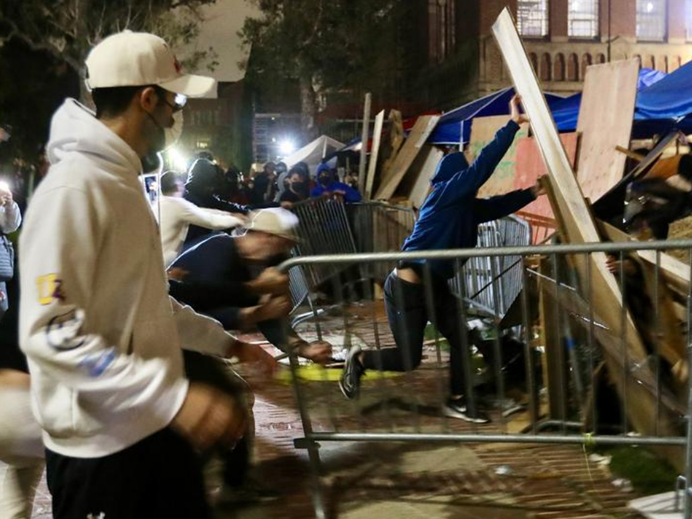

The University of California, Los Angeles (UCLA), a prestigious public institution, has suspended all classes for Wednesday following a night of violent confrontations on campus related to the ongoing Palestinian-Israeli conflict in Gaza.
In response to the unrest, the university issued an alert on Wednesday morning, stating, “Due to the distress caused by the violence that took place on Royce Quad late last night and early this morning, all classes are cancelled today.”
The university urged faculty, staff, and students to steer clear of the Royce Quad area, announcing the closure of Royce Hall, a prominent campus landmark, through Friday.
University of California President Michael Drake announced an “independent external review” in a statement on Wednesday, indicating a proactive response to the incident.
Drake emphasized the need for action when free expression disrupts learning, endangers safety, or hampers university operations, particularly referencing Tuesday’s events.
Last week, pro-Palestinian demonstrators established tents near Royce Hall, leading to escalating tensions culminating in violent clashes late Tuesday night.
According to reports from the university’s student newspaper, Daily Bruin, clashes erupted between pro-Palestinian protesters and pro-Israel counter-protesters, resulting in the deployment of fireworks, tear gas, and physical altercations.
Chancellor Gene Block faced criticism for his handling of the encampment, which was declared unlawful by UCLA officials on Tuesday. Despite this, clashes persisted, prompting campus police and security to intervene.
Several injuries were reported among participants in the encampment, prompting swift condemnation from university officials and law enforcement.
The escalation of tensions at UCLA reflects broader unrest over the Palestinian-Israeli conflict, with similar protests erupting at colleges and universities nationwide.
The crackdown on protests has raised concerns about free speech rights on campuses, with experts drawing parallels to historical episodes of censorship and intimidation.
The House of Representatives’ passage of legislation aimed at broadening the definition of antisemitism has also sparked debate, with critics warning of potential infringements on free speech.