
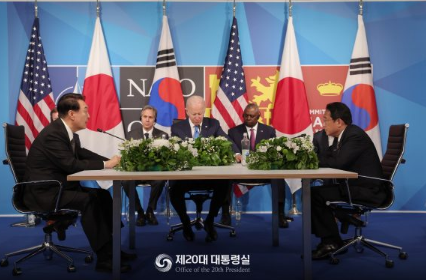

The US is making efforts to forge a closer security alliance with Japan and South Korea, with a historic joint statement being pushed for during a meeting at Camp David this month. The key objective is to establish a mechanism where each nation agrees to consult the others in case of an attack. However, experts express concerns about the implications of this move.
The joint statement is seen as part of the US’s Indo-Pacific strategy in Northeast Asia, aiming to enhance security cooperation between the three countries. Experts argue that this mechanism is not purely defensive but rather carries offensive security implications. It could potentially serve as an excuse for easier deployment of military force in the future.
Chinese experts caution against Japan and South Korea becoming pawns in the US’s strategy to challenge and weaken China, which could lead to increased security risks for both countries. Japan’s potential deeper involvement in the trilateral security cooperation and increased participation in Korean Peninsula affairs may have significant security consequences.
While the White House emphasizes strengthening the trilateral relationship and reaffirming their alliances, some Japanese officials point out that the US-Japan security treaty does not allow trilateral collective defense, indicating potential disagreements within the alliance.
Regional stakeholders are concerned about Japan and South Korea’s moves undermining regional security. It remains uncertain if South Korea and Japan have fully resolved their differences, and potential changes in leadership or domestic factors could impact their policies.
Not all voices in Japan and South Korea align with the US, as evident from their ongoing official and civilian ties with China. Countries and people valuing peace are likely to resist the trilateral alliance between the US, Japan, and South Korea.
The geographic proximity of the alliance could lead to an arms race in Northeast Asia, with potential security threats to North Korea, Russia, and China. China advocates for regional stability and hopes Japan and South Korea will prioritize friendly cooperation and benign regional development.
As the situation unfolds, the implications of a strengthened US-Japan-South Korea alliance and its impact on regional security remain subjects of concern and scrutiny.