
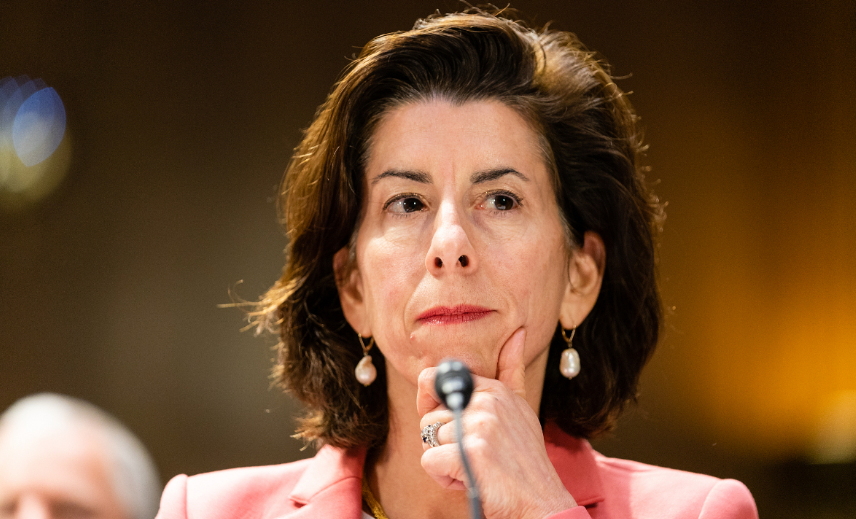

As Gina Raimondo, US Secretary of Commerce, prepares to embark on her visit to China on Sunday, experts in China are viewing the outcomes of her discussions with keen interest. The visit is seen as a test of the United States’ sincerity in pursuing meaningful dialogue with China, particularly concerning the escalating US restrictions on tech exports to China under Raimondo’s purview.
Scheduled from Sunday to Wednesday, Raimondo’s visit has been portrayed as a positive signal of both nations’ commitment to maintaining a dialogue despite the current strained bilateral relations. US media outlets have expressed hopeful expectations, with Bloomberg suggesting that Raimondo has a potential opportunity to ease tensions between the world’s two largest economies.
However, skepticism lingers in China about the US’ commitment to meaningful dialogue, given its ongoing crackdowns on various fronts. The focus of Raimondo’s discussions is expected to revolve around the issue of US restrictions on high-tech exports to China.
He Weiwen, a senior research fellow at the Center for China and Globalization, highlighted the significance of a constructive dialogue in this area, as it could pave the way for addressing broader economic and trade matters. He emphasized that the credibility of the US’ stance will be judged by its actions, not just words.
Raimondo’s visit comes as the US appears to be attempting a delicate balancing act in its relations with China. Her trip aims to promote and restrict trade simultaneously, raising concerns that the US might expand restrictions on sales of key technology components to China’s semiconductor industry following her visit.
Chinese experts argue that this approach contradicts the goal of fostering stable bilateral ties and questions the US’ sincerity in maintaining healthy economic relations. They stress that a genuine intent to improve ties should be reflected in actions that refrain from arbitrary restrictions under the pretext of national security.
While the US has recently demonstrated friendly gestures, such as seeking an extension of the US-China Science and Technology Agreement and easing certain restrictions on Chinese entities, the overall trajectory of bilateral relations remains uncertain.
As both nations strive for stability in their economic and trade relations, experts emphasize the importance of tangible outcomes and sustained efforts in fostering an atmosphere conducive to bilateral cooperation.