
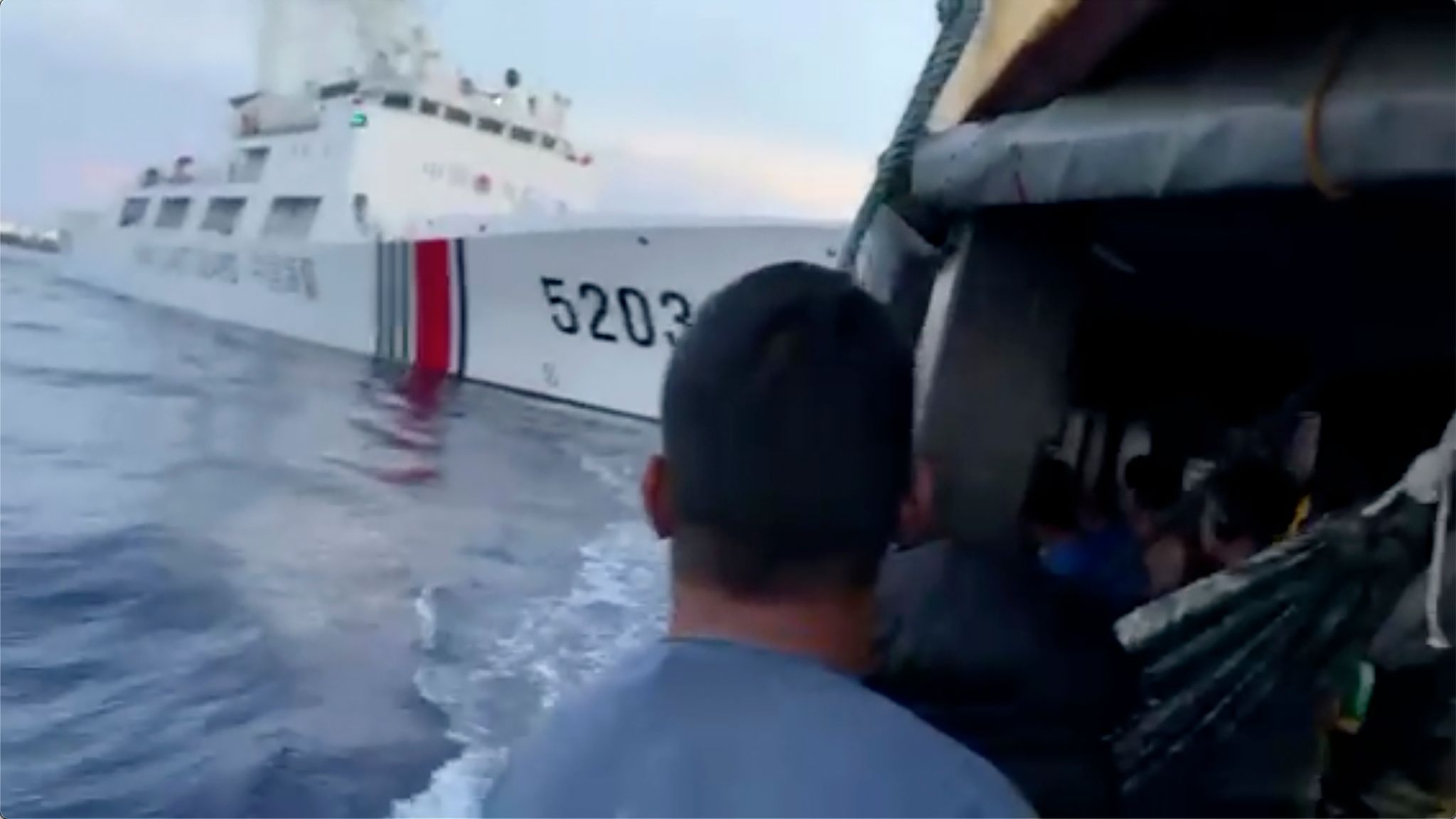

The United States has issued a warning to China, indicating its readiness to defend the Philippines in the event of an armed attack following two collisions involving vessels from both countries in the South China Sea. These incidents took place near a contested shoal, raising tensions between China and the Philippines.
The US declaration is based on a 1951 treaty and asserts its commitment to defend the Philippines as part of their mutual defense obligations. This treaty encompasses a broad range of situations, including those involving coast guard vessels, in any area within the South China Sea.
The recent collisions occurred when Chinese ships obstructed and collided with two Filipino vessels near Second Thomas Shoal, which falls within the Philippines’ 200-mile exclusive economic zone. Although there were no reported injuries, these encounters resulted in damage to a Philippine coast guard ship and a wooden-hulled supply boat operated by navy personnel.
The Philippines has accused China of “illegal and dangerous” conduct and summoned the Chinese ambassador in response to the incidents. China, on the other hand, accused one of the Philippine boats of “deliberately” causing trouble by reversing into a Chinese fishing vessel.
In an official statement, the US State Department criticized China’s actions in the contested waters, deeming them “dangerous and unlawful” while alleging violations of international law. They stated that China had intentionally interfered with the Philippine vessels’ freedom of navigation in the high seas, which is guaranteed under international law.
The US cited the 1951 Mutual Defense Treaty, emphasizing its commitment to defend the Philippines in the South China Sea, including its coast guard vessels, if they come under armed attack. The treaty obligates the US to provide support and protection to the Philippines in times of conflict or external aggression.
MaryKay Carlson, the US ambassador to the Philippines, voiced the US’s disapproval of China’s actions on social media platform X (formerly known as Twitter), highlighting their concern for the safety of Filipino service members. She reiterated the US’s commitment to safeguard Philippine sovereignty and support a free and open Indo-Pacific.
It’s important to note that the Permanent Court of Arbitration in The Hague ruled in 2016 that China’s claim to most of the South China Sea lacked a basis in international law, a claim that Beijing does not acknowledge.
In recent months, the Philippines has faced mounting tensions with China regarding territorial disputes in the South China Sea, including attempts by China to block Filipino fishermen from accessing the Scarborough Shoal, located within the Philippines’ exclusive economic zone. The Philippines took measures to counter these attempts, further intensifying the situation. In August, the Philippines accused a Chinese coast guard vessel of using a water cannon against one of its ships in the region.