

Beijing China’s post-pandemic economic recovery is faltering as domestic consumption weakens and external pressures particularly the threat of new U.S. tariffs intensify, casting fresh uncertainty over the world’s second-largest economy.
Official data released this week shows that China’s GDP grew by just 4.2% in the second quarter of 2025, missing economists’ expectations and marking a slowdown from the 5.1% recorded in the first quarter. Consumer spending, once seen as the bedrock of China’s transition to a more services-driven economy, has softened significantly amid rising household debt, stagnant wages, and persistent concerns over job security.
Consumer Sentiment Falters
Retail sales rose just 1.8% year-on-year in June, the weakest pace since early 2023. The decline comes despite various stimulus efforts by Beijing, including interest rate cuts and direct subsidies aimed at boosting household consumption.
“Chinese households remain cautious,” said Chen Yi, a senior economist at Beijing Horizon Research. “There’s a psychological shift happening people are saving more and spending less, which is a stark contrast to the high-growth years of the past.”
Youth unemployment, still hovering above 15%, and ongoing turbulence in the property sector have dampened confidence further. Major property developers continue to struggle with liquidity issues, dampening investment and fueling concerns about the broader financial system.
Trade Tensions Escalate
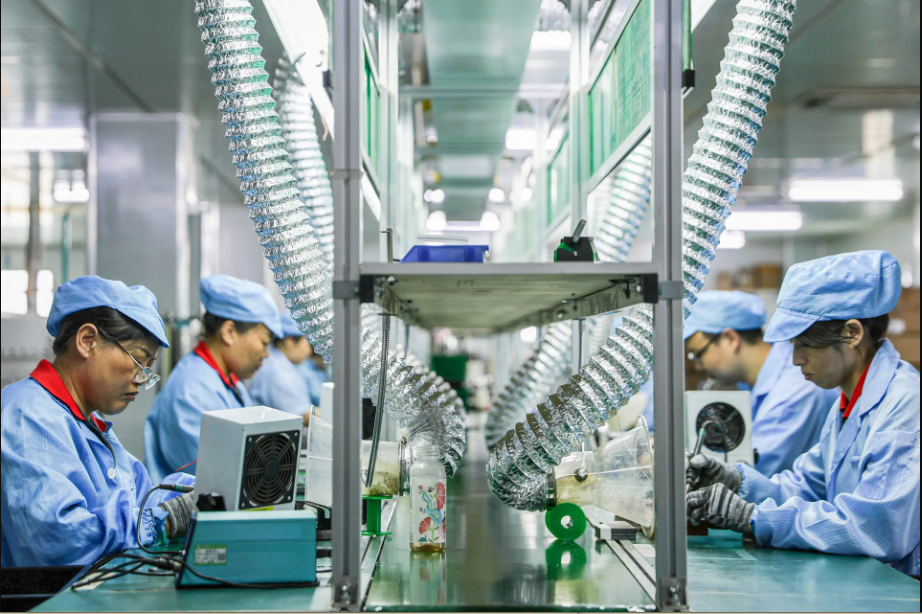
Meanwhile, renewed trade tensions with the United States are adding to the pressure. The Biden administration is reportedly considering new tariffs on Chinese electric vehicles (EVs), semiconductors, and green technology components sectors that are central to Beijing’s industrial ambitions.
U.S. officials cite concerns over unfair subsidies and national security. If imposed, these tariffs could significantly dent China’s high-tech export drive, a key pillar of its long-term growth strategy.
“This is more than a trade dispute,” said Li Ming, a trade analyst at Tsinghua University. “It’s a structural confrontation that may limit China’s ability to pivot toward advanced manufacturing and green energy.”
Policy Crossroads
In response to the growing headwinds, Chinese policymakers are signaling a potential shift in economic priorities. Premier Li Qiang recently hinted at a “pro-growth recalibration,” including tax reforms and increased support for private enterprises.
However, analysts warn that Beijing faces limited room to maneuver due to high local government debt and weakening global demand.
“There’s a risk of policy fatigue setting in,” said Alicia García-Herrero, chief economist for Asia-Pacific at Natixis. “The usual levers such as infrastructure spending and credit easing are proving less effective.”
Global Implications
China’s slowdown has ripple effects across global markets, particularly for commodity-exporting nations and multinational firms reliant on Chinese demand. Asian stock markets dipped on Monday following the GDP release, and oil prices edged lower on fears of reduced industrial activity in China.
For now, all eyes are on the Chinese government’s next moves as it attempts to steady the economy and navigate an increasingly uncertain geopolitical landscape.