
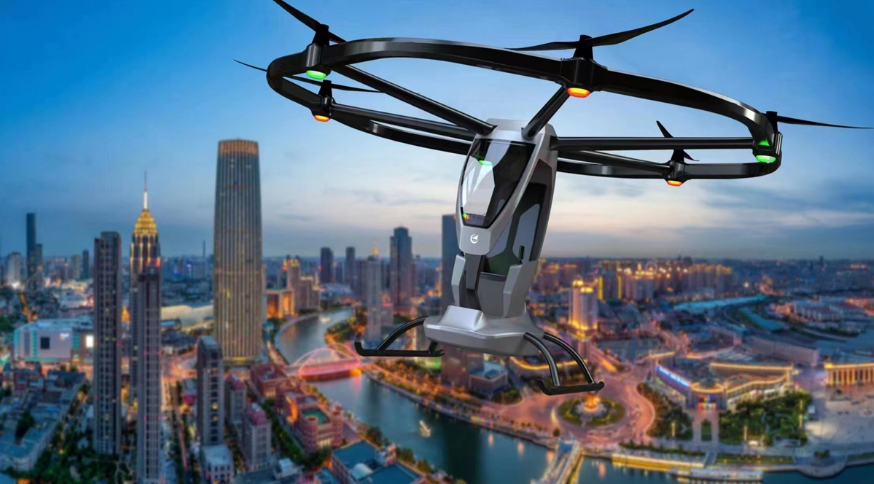

At an upcoming helicopter expo in China, a new fully electric hexacopter aircraft capable of switching between manned and unmanned modes for various mission types is set to be unveiled. This innovative aircraft represents the latest advancements in new energy and intelligent technology in the aviation sector.
Deng Jinghui, a chief designer at the China Helicopter Research and Development Institute under the Aviation Industry Corporation of China (AVIC), highlighted the transformative impact of new energy and intelligent technology on helicopters and their applications. Conventional helicopters, which rely on fuel engines, are facing challenges from new concepts and configurations that include vertical takeoff and landing (VTOL) aircraft.
Electric-powered VTOL aircraft, driven by advancements in new energy technology, no longer adhere to the traditional helicopter design principles. Instead, they use electric motors to replace fuel engines and employ multiple distributed rotors in place of a single large rotor. These changes have lowered the technical requirements for research and development.
The rapid progress of new energy battery technology is expected to further accelerate the development of electric VTOL aircraft. Some of the latest batteries are already capable of supporting a 2-ton-class helicopter to transport a crew of five over a distance of 200 kilometers in just two hours. Notably, these electric VTOLs are more cost-effective, offering the same performance as conventional helicopters at only half the cost.
In addition to new energy advancements, intelligent technology is revolutionizing the aviation sector. Intelligent features are expected to enhance flight safety and ease of use, making helicopters more accessible to a wider range of operators. These technologies can assist pilots with decision-making and evasive maneuvers, ultimately reducing the complexity and stress associated with flying.
The AVIC China Helicopter Research and Development Institute has been actively involved in researching future helicopter technology, including intelligent, unmanned, and green technology. At the helicopter expo, AVIC will showcase its innovative achievements in fully electric VTOL aircraft, hydrogen-powered aircraft, combat simulation platforms, and easy landing technology.
One of the featured exhibits is the AR-300, a hexarotor aircraft powered entirely by electricity. Designed with modularity in mind, the AR-300 can seamlessly switch between manned and unmanned modes, making it suitable for civilian applications like tourism, urban transportation, and material delivery, as well as military purposes such as battlefield transport, fire strikes, and reconnaissance.
Another multi-rotor aircraft on display is the M20, which utilizes high-pressure hydrogen as its energy source. The M20 boasts long endurance, low noise levels, high maneuverability, and ease of transport.
The unveiling of these advanced electric and hydrogen-powered VTOL aircraft underscores China’s commitment to pushing the boundaries of aviation technology and promoting sustainable and intelligent solutions in the sector.
Source: Global Times
Analysis:
The upcoming unveiling of a fully electric hexarotor aircraft with manned and unmanned modes at a helicopter expo in China demonstrates the country’s commitment to innovation in aviation technology. The new aircraft represents a significant advancement in the fields of new energy and intelligent technology and has the potential to transform various applications, including civilian and military.
Key points from the article include:
- Advancements in New Energy Technology: Electric-powered VTOL aircraft are challenging conventional helicopters by replacing fuel engines with electric motors and adopting multiple distributed rotors. This shift has significantly reduced the technical requirements for research and development, making these aircraft more accessible and cost-effective.
- Progress in Battery Technology: New energy battery technology has progressed rapidly, allowing electric VTOL aircraft to achieve impressive performance, including the ability to transport passengers and cargo over substantial distances. These batteries offer a practical and efficient solution for electric aviation.
- Intelligent Technology Integration: Intelligent technology is playing a crucial role in enhancing flight safety and ease of use. These advancements are expected to reduce the complexity of flying helicopters and make them more accessible to a broader range of operators.
- Innovation in Aviation Applications: The showcased AR-300 and M20 aircraft demonstrate China’s dedication to exploring new possibilities in aviation. These aircraft can serve various purposes, from civilian applications like tourism and urban transportation to military roles such as battlefield transport and reconnaissance.
- Sustainable and Intelligent Solutions: China’s commitment to sustainable and intelligent aviation solutions aligns with global efforts to reduce the environmental impact of aviation while advancing technological capabilities.
Overall, this development underscores China’s ambitions to lead in the aviation sector by leveraging new energy and intelligent technology to create innovative and adaptable aircraft for a variety of applications.