
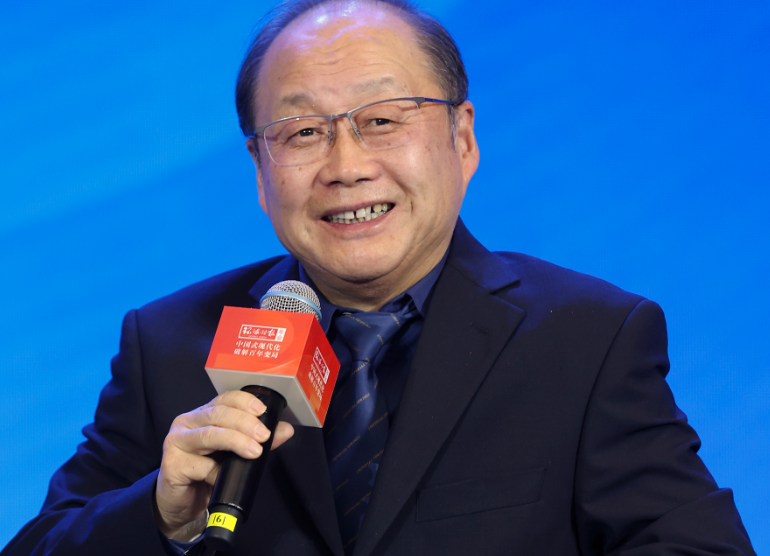

Experts at the 2024 Global Times Annual Conference held in Beijing emphasized that the urbanization and industrialization of central and western parts of China will serve as a catalyst for the country’s economic development. The discussions underscored the pivotal role of the development in the western region in achieving Chinese modernization.
Fang Ning, chair professor at Sichuan University, highlighted the need for breakthroughs in space development, urging a shift from the current geographical development structure to focus on the western region along the Heihe-Tengchong Line. This line, proposed by Chinese geographer Hu Huanyong in 1935, delineates the varying population densities in China, connecting Heihe in Northeast China’s Heilongjiang Province to Tengchong in Southwest China’s Yunnan Province.
Fang projected that the second wave of China’s industrialization and modernization will impact the Heihe-Tengchong line, leading to increased urbanization rates. Notably, the economic growth of several provinces and regions in the central and western parts of the country, including Gansu, Ningxia, Xinjiang, and Xizang Autonomous Region, outperformed the national average GDP growth in the first three quarters of 2023.
Yang Xuedong, director of The Institute of International Studies at Tsinghua University, emphasized the linkage between opportunities and highlights of China’s economic development with urbanization. He stressed that the focus should be on the creation and formation of urban agglomerations. Efforts should be directed towards promoting the building of city clusters to achieve high-quality development. Yang proposed developing city clusters in the central and western regions alongside existing coastal city clusters to boost local area development.
The western part of China, rich in wind power and photovoltaic power, holds significant growth potential for new-energy sectors. Fang Ning suggested that constructing new mega-cities in this region could lead to economies of agglomeration and scale, fostering industrialization, modernization, and contributing to Chinese modernization goals.