
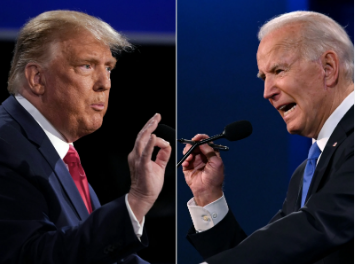

Florida Governor Ron DeSantis, once considered a major threat to Donald Trump in the Republican primaries, has announced the end of his White House bid, endorsing former President Trump. Analysts suggest that this move solidifies Trump’s position as the GOP nominee against Joe Biden in the upcoming election, turning the 2024 race into a highly contentious “Biden vs Trump 2.0.”
DeSantis’ decision, following a second-place finish in the Iowa Republican caucuses, leaves Trump and former US ambassador to the UN Nikki Haley as the main contenders ahead of the New Hampshire primary. DeSantis, acknowledging Trump’s primary dominance, emphasized his support for the former president in a video statement, stating, “while I’ve had disagreements with Donald Trump… Trump is superior to the current incumbent Joe Biden.”
Trump, pleased with recent endorsements, mentioned DeSantis at a campaign event in Rochester, New Hampshire, indicating the growing support within the Republican Party. Political experts believe Trump is on track to secure the GOP nomination for the presidential election, with both Haley and DeSantis unable to pose a significant challenge.
Despite ongoing legal issues, the possibility of Trump losing his qualification remains small. The highly polarized 2024 election, described as a “zero-sum game,” intensifies divisions in the US, with a significant portion of voters from both parties viewing the other’s victory as a threat to democracy.
Xin Qiang, deputy director of the Center for American Studies at Fudan University, highlighted that the campaign would feature constant personal attacks and attempts to depict each candidate as the biggest threat to democracy, further tearing apart the country. This increased division would hinder policymaking and decision-making, impacting various aspects of the nation.
While most major Republicans, including Trump, DeSantis, and Haley, share a hawkish stance against China, experts suggest that playing the “anti-China card” might not be enough to distinguish them. Anti-China rhetoric has become a form of “political correctness,” but polls indicate that voters may not support such language. Hostility toward China could have consequences for US-China relations, and politicians might find the need for cooperation when addressing challenges.
In a poll of likely voters in the 2024 election, a majority preferred candidates who stand up for American interests without singling out China. Analysts caution that China-US relations may face challenges during the presidential election year, and both nations should be prepared to manage potential risks.