
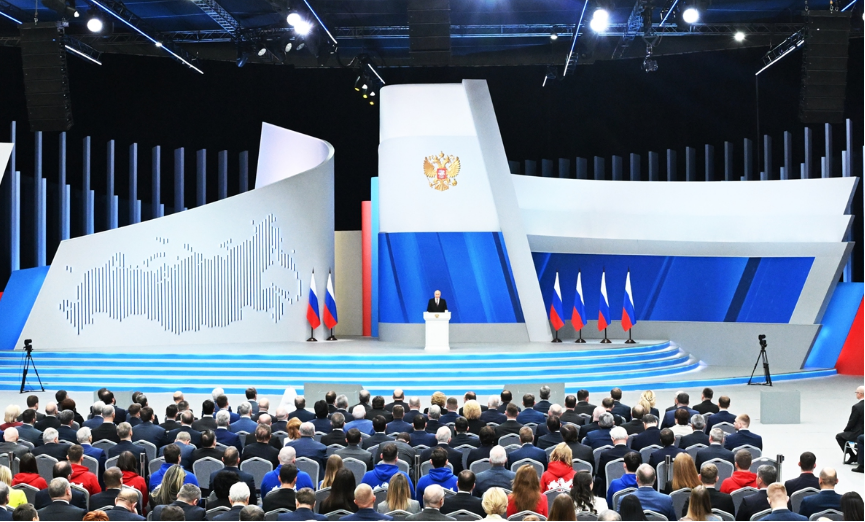

Russian President Vladimir Putin delivered his annual State of the Nation Address, projecting confidence in Russia’s development amidst Western pressure and the ongoing military operation in Ukraine. Analysts suggest Putin is signaling that Russia is unfazed and even content with the current situation, awaiting talks with the US. Chinese analysts note Russia’s better-than-expected economic performance, attributing its resilience to self-reliance on energy and food, strong demand for military products, and limited global sanctions support.
In his address, Putin highlighted Russia’s ability to withstand internal destabilization attempts, emphasizing the West’s failure to weaken the nation. Regarding the conflict in Ukraine, he asserted Russia’s commitment to ending the war and eradicating Nazism, with the Russian army making confident advances.
While it is early to determine strategic outcomes in Ukraine, the US and Western dissatisfaction with the situation is evident. French President Macron’s proposal of European troops to aid Ukraine faced NATO reluctance. Putin warned of “tragic consequences” for countries sending troops to Ukraine, hinting at nuclear capabilities. Chinese experts see the US challenging Russia to maintain unipolarity, predicting continued Western measures against Russia.
Despite tensions, Putin expressed openness to US talks on strategic stability, highlighting readiness for dialogue but rejecting coercion attempts. “Strategic stability” refers to nuclear weapon negotiations, and Putin prefers dialogue with the US presidential election winner.
On the economy, Putin asserted Russia’s significant Purchasing Power Parity (PPP) and outpacing G7 growth in 2023. He projected Russia joining the top four global economies soon. Putin also noted BRICS surpassing G7 in global GDP share by 2028.
Chinese analysts credit Russia’s resilience to strategic economic management, military demand stimulating manufacturing, and non-Western support. Russia’s ties with the Global South, including China, contribute to its ability to navigate Western sanctions. The future of Russia-West ties hinges on the US presidential election outcome.